Educator Insight: Taylor on the Harlem Renaissance
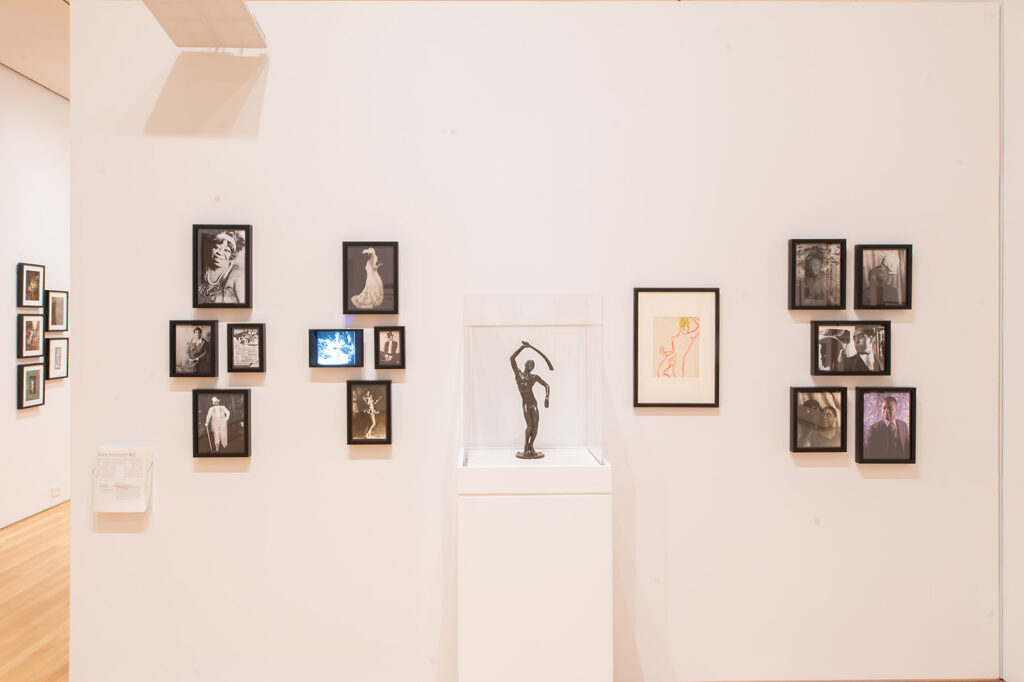
Installation view of "The First Homosexuals: The Birth of a New Identity, 1869-1939", at Wrightwood 659, 2025. Photo courtesy of Daniel Eggert (@DesigningDan).
Carl Van Vechten’s 1941 portrait of the poet Countee Cullen vaguely evokes the many portraits of Frederick Douglass. As one of the most photographed Americans in the 19th century, Douglass strategically used his image to render palpable the idea that Black people were more than capable of being powerful societal and cultural contributors. (1) What more is the Harlem Renaissance than an explicit affirmation of that very sentiment? As children of the Great Migration, Black artists, poets, writers, and intellectuals rallied together in Harlem to cultivate a community where they could share themselves and their talents with one another. Queer expressivity, though less publicized, was an integral part of it.
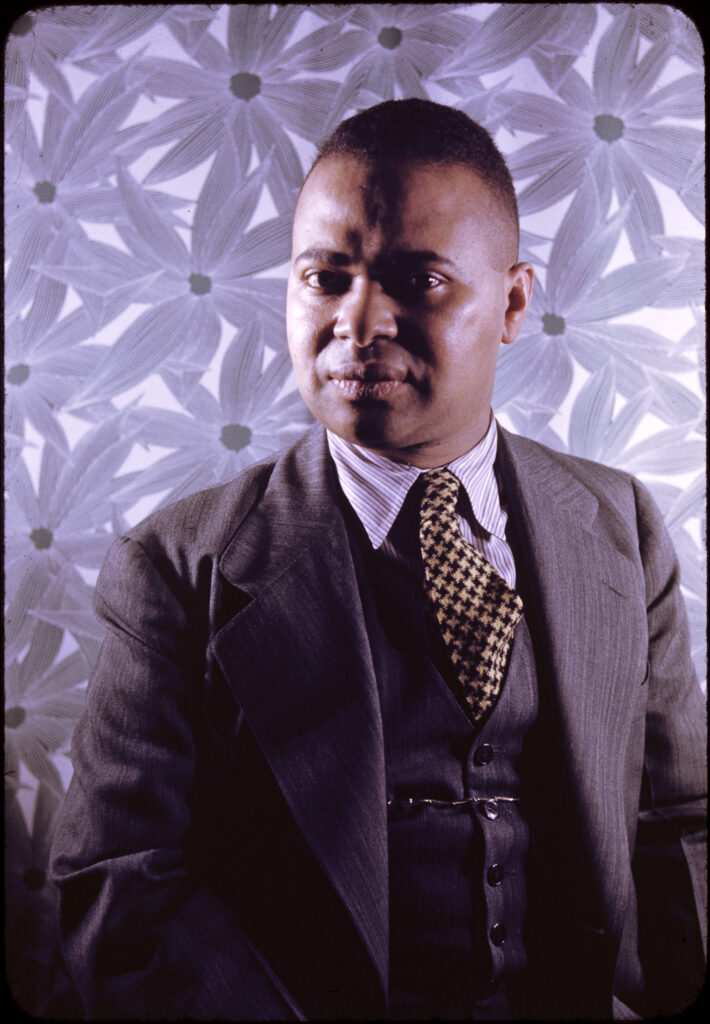
Countee Cullen shaped his portraits, his career, and his poetic oeuvre into a masterclass in self-fashioning. (2) As he sits for Van Vechten’s camera in a three-piece suit before a floral background, viewers immediately sense the value that is placed on aesthetic presentation. His upright posture and direct gaze are a proclamation of his presence as a well-educated, queer, Black poet of the Harlem Renaissance.
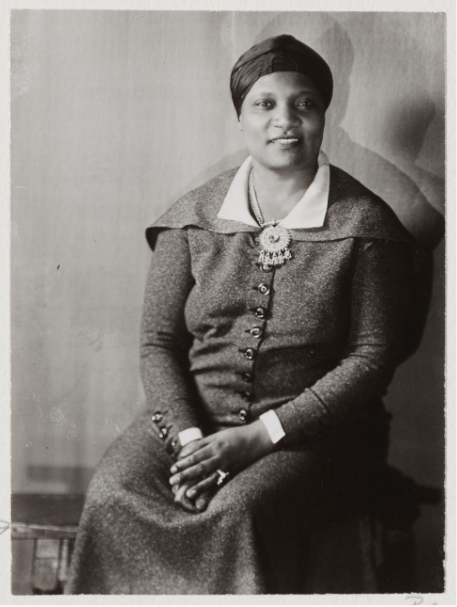
Cullen’s brief marriage to Yolande Du Bois ended primarily as a result of his confessed sexual attraction to men. (3) Van Vechten, photographer and patron of the Harlem Renaissance, similarly married women but engaged in a number of homosexual affairs. (4) Not at all public, though not entirely private, much of homosexual expression was reserved for intimate settings. Queer artists found community at parties hosted by Van Vechten at his home, or by A’Leila Walker at The Dark Tower, an apartment that she named after Cullen’s column in Opportunity Magazine.5 Many of these relationships, not all sexual or romantic, are evidenced and preserved in personal correspondences, such as the letters shared between Cullen and his mentor, also privately homosexual, the famed writer and philosopher Alain Locke.

We see this tendency elsewhere in the exhibit, in Beauford Delaney’s pastel portrait of James Baldwin. Delaney and Baldwin shared a mentor-mentee relationship that developed into a close friendship spanning multiple decades. During that time, Baldwin became a recurring subject for the artist. Here in pastel, it’s as if each of Delaney’s marks are a testament to the intricate strength of their bond. Baldwin wrote in 1985 that, “Beauford was the first walking, living proof, for me, that a black man could be an artist.”6 Delaney and Baldwin used art and writing as lifelong outlets for personal transformation, repeatedly citing one another along the way. We see too that Delaney addressed this pastel portrait to another mutually-shared artist friend, John Arvonio, which suggests that the piece wasn’t necessarily intended for public eyes, perhaps made only as a casual note of tenderness.
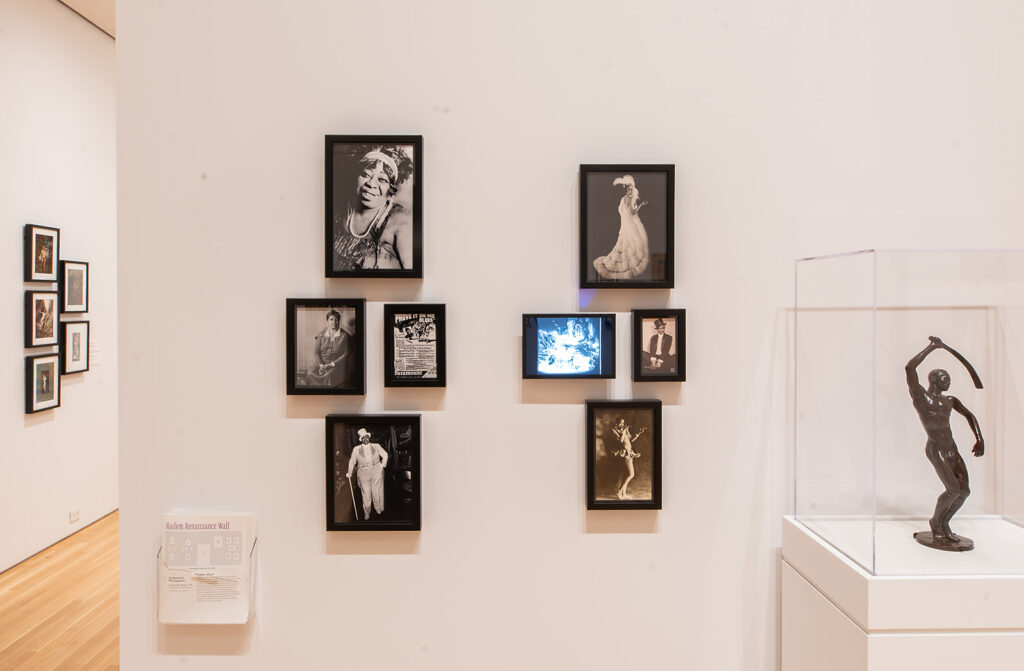
Each of these relationships suggest that the Harlem Renaissance was built by a web of connected artists, writers and thinkers who understood it necessary to platform and uplift one another by carving out spaces for themselves in the face of greater exclusion, be it racism, homophobia, or both. As they shaped themselves and their immediate environments, Black and queer people shaped history, and from the fragments that have been preserved, contemporary audiences may find inspiration to continue doing the same.
Endnotes
- Allison Meier, “Why Frederick Douglass was the Most Photographed 19th-Century American,” Hyperallergic, February 6, 2017, https://hyperallergic.com/356148/frederick-douglass-most-photographed-19th-century-american/
- “Countee Cullen,” The Poetry Foundation, accessed April 2, 2025, https://www.poetryfoundation.org/poets/countee-cullen
- “Countee Cullen,” The National Museum of African American History and Culture, accessed May 7, 2025, https://nmaahc.si.edu/countee-cullen#:~:text=Countee%20Cullen%20was%20very%20secretive,context%20of%20queer%20culture%20today.
- Nancy Kuhl, “Emily Bernard on Carl Van Vechten,” Beinecke Rare Book & Manuscript Library, archived January 26, 2017, at https://beinecke.library.yale.edu/article/emily-bernard-carl-van-vechten
- Lauren Walser, “How A’Leila Walker And The Dark Tower Shaped the Harlem Renaissance,” National Trust for Historic Preservation, archived March 29, 2017, at https://savingplaces.org/stories/how-alelia-walker-and-the-dark-tower-shaped-the-harlem-renaissance
- James Baldwin, The Price of the Ticket: Collected Nonfiction 1948-1985 (St. Martin’s/Marek, 1985), xi, https://archive.org/details/priceofticketcol0000bald_t2f1/page/n7/mode/2up
Taylor Allmon is an educator at Wrightwood 659 and a research-based artist working out of East Garfield Park. She is a graduate of The School of the Art Institute of Chicago where she studied painting and art history.