Educator Insight: Possum on Cross Dressing and Gender Performance
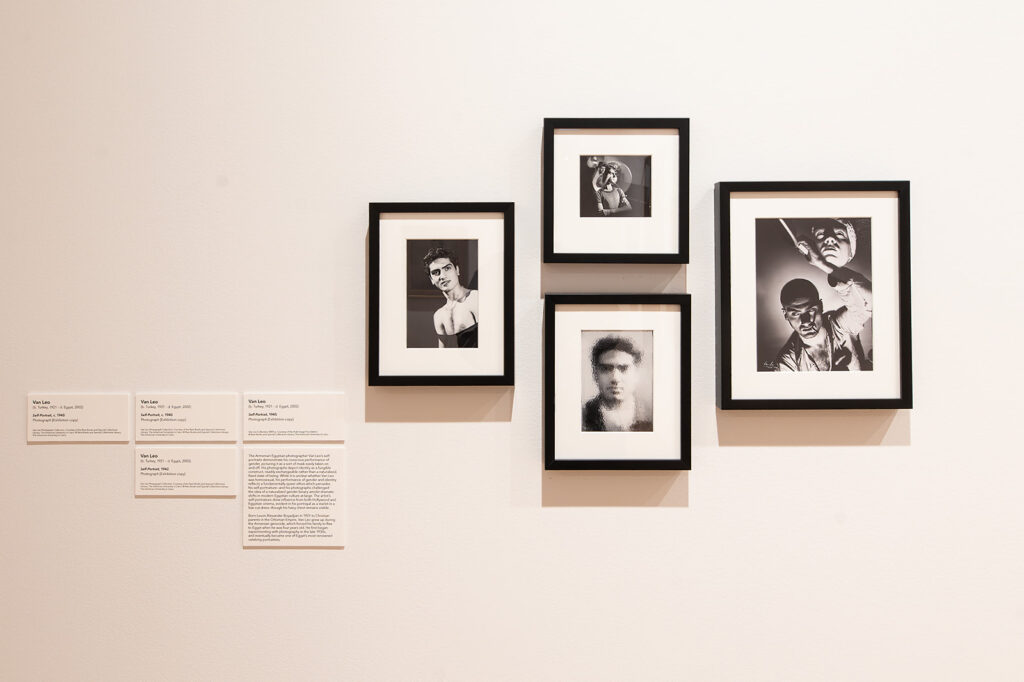
Installation view of The First Homosexuals: The Birth of a New Identity, 1869-1939, at Wrightwood 659, 2025. Photo courtesy of Daniel Eggert (@DesigningDan).
How can cross-dressing serve as a vehicle for expanded possibilities of gender play and expressions?
Outfits prescribed “cross-dressing”— wearing clothing typical of the other binary gender — don’t always communicate a strict identification with the binary scripts as the term suggests. Intentional style can facilitate a spectrum of nuanced male femininity or female masculinity entirely outside of the realm of a binary gender.
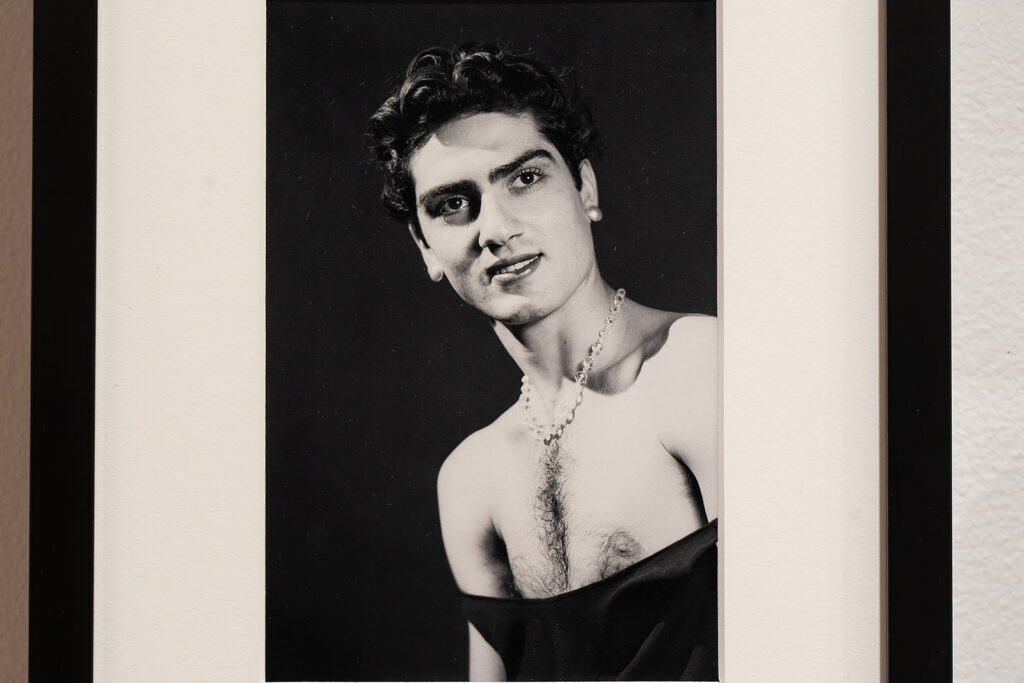
Detail shot of Self-portrait by Van Leo in The First Homosexuals: The Birth of a New Identity, 1869-1939, at Wrightwood 659, 2025. Photo courtesy of Daniel Eggert (@DesigningDan).
Playful male femininity through cross-dressing is explored throughout photographer Van Leo’s career. He indulges in the malleability of dress and molds himself into a myriad of characters in his portraits from the girl next door to the scruffy gangster (1).
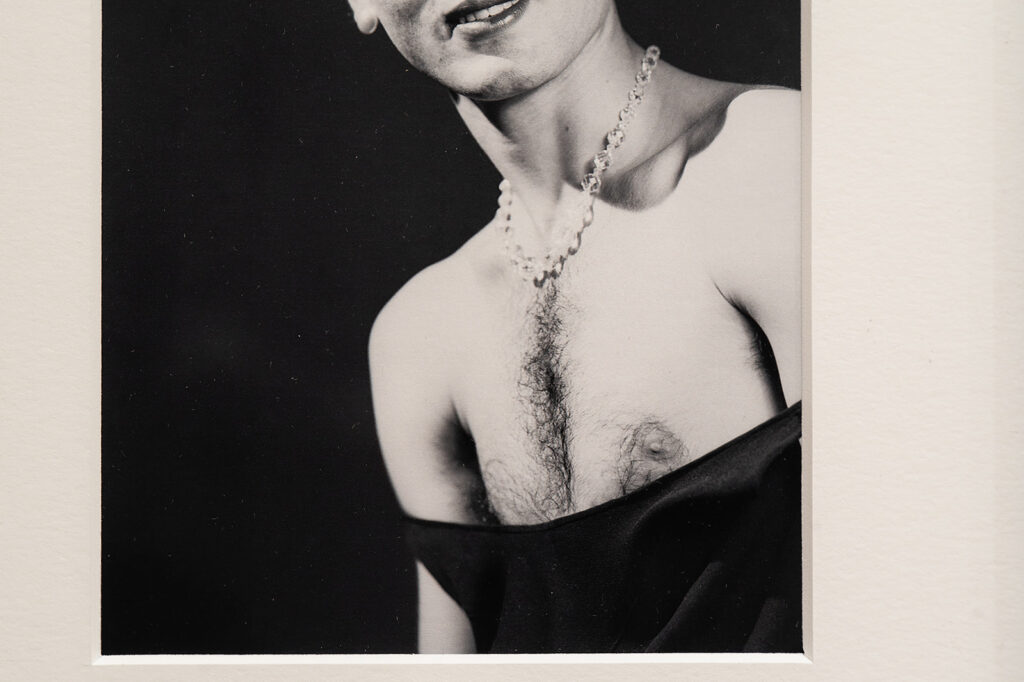
Detail shot of Self-portrait by Van Leo in The First Homosexuals: The Birth of a New Identity, 1869-1939, at Wrightwood 659, 2025. Photo courtesy of Daniel Eggert (@DesigningDan).
In his cross-dressing Self Portrait, Van Leo adorns an outfit reminiscent of a Hollywood star: an alluring off the shoulder dress completed with a set of dazzling accessories. Although aiming to resemble a female movie star, the low neckline of the garment reveals Van Leo’s flat chest and body hair amongst other clues to his own physicality. These intentionally untouched attributes ground his identity in the corporal gender playground, guiding him to slip into and shed the characters while avowing his masculinity. Here, gendered dress becomes Van Leo’s tool to a nuanced exploration of gender.
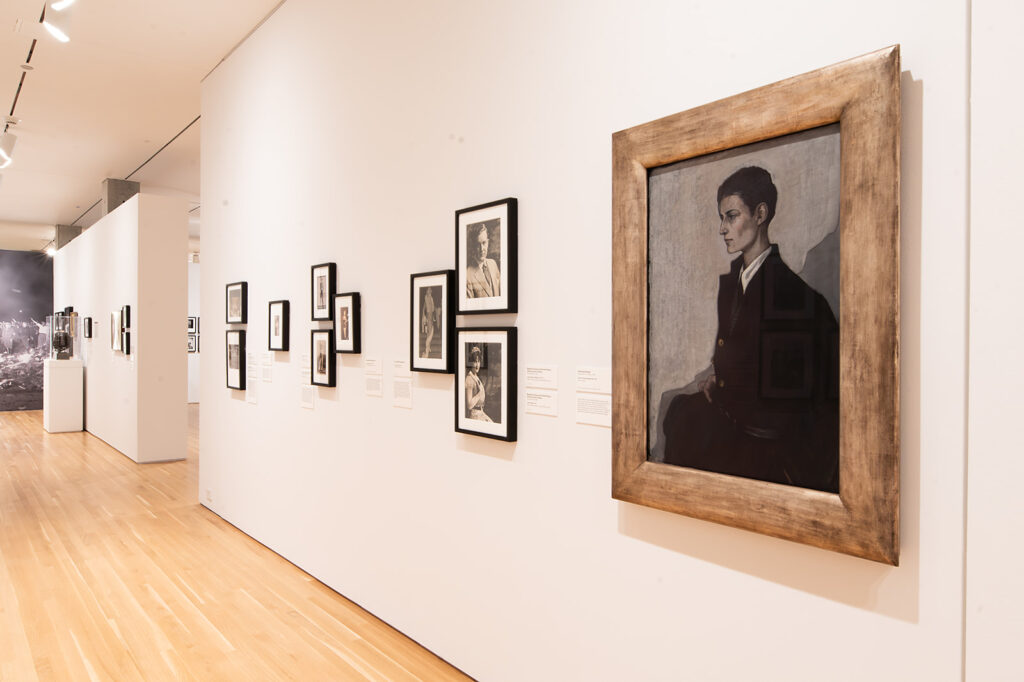
Installation view of The First Homosexuals: The Birth of a New Identity, 1869-1939, at Wrightwood 659, 2025. Photo courtesy of Daniel Eggert (@DesigningDan).
In Peter (A Young English Girl), cross-dressing shapes a modern female masculinity. As the heir of a catering empire, painter Peter Gluckstein lived free from financial concerns and afforded liberties to depart from the binary in daily presentation (2). In this portrait by fellow lesbian painter Romaine Brooks, Gluckstein posed in a sleek belted overcoat atop a three-piece suit completed with a silk tie. The attire, while considered masculine at the time, was not worn to assimilate but to assert an alternative masculinity. Gluckstein’s suiting sets itself apart in the intricacies of the tailoring. It retained Gluckstein’s silhouette, yet a hint of space is reserved between the body and each layer which ever so subtly blurs the figure. The result is a masculine suit that traces the female body.
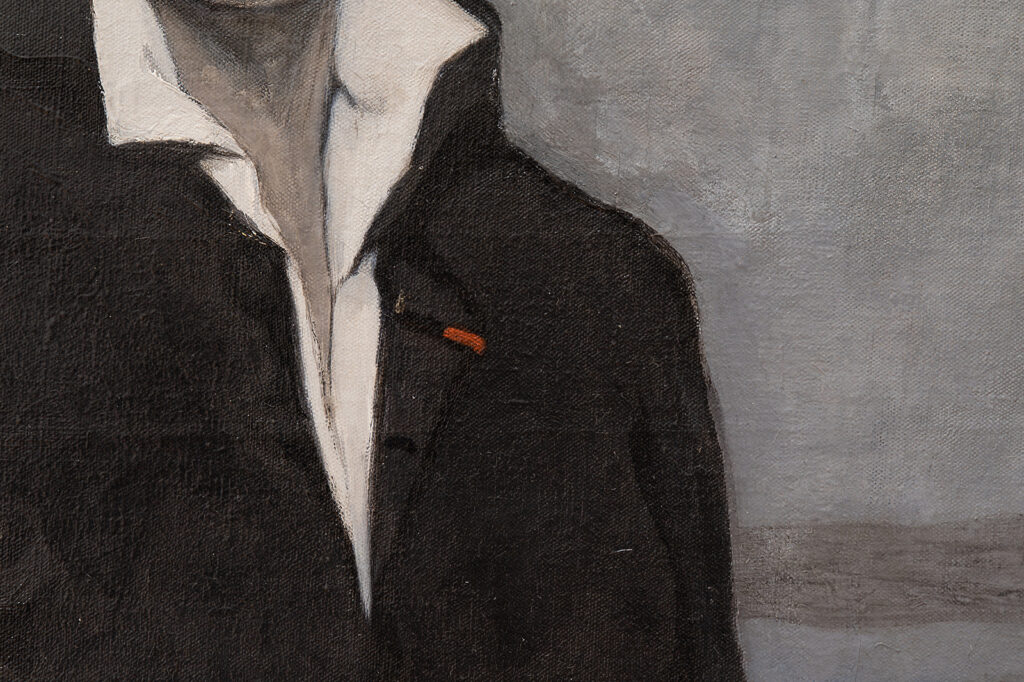
Detail shot of Self-portrait by Romaine Brooks The First Homosexuals: The Birth of a New Identity, 1869-1939, at Wrightwood 659, 2025. Photo courtesy of Daniel Eggert (@DesigningDan).
Another possibility created by these binary obstructing outfits is an identity ambivalent of gender, as seen in Romaine Brooks’ Self Portrait. Here against a grey landscape, Brooks stands stoically in a loosely buttoned riding outfit. The ensemble of the open collar dress shirt and long jacket, the tall hat and grey leather gloves gently veils any identifiable gender feature.

Detail shot of Self-portrait by Romaine Brooks The First Homosexuals: The Birth of a New Identity, 1869-1939, at Wrightwood 659, 2025. Photo courtesy of Daniel Eggert (@DesigningDan).
A mystical aura surrounds the decidedly androgynous figure in the minimal outfit. In this sea of grey, two specks of red stand out: a hint of rouge on Brooks’ lips and the crimson on her lapel – a Legion of Honor awarded by the French government for her art (3). Brooks appears keen to clearly outline her accomplishments instead of her gender. The wardrobe choice and eerie color palette release the centrality of gender in the painting and what remains is the essence of the person- a captivating, otherworldly existence.
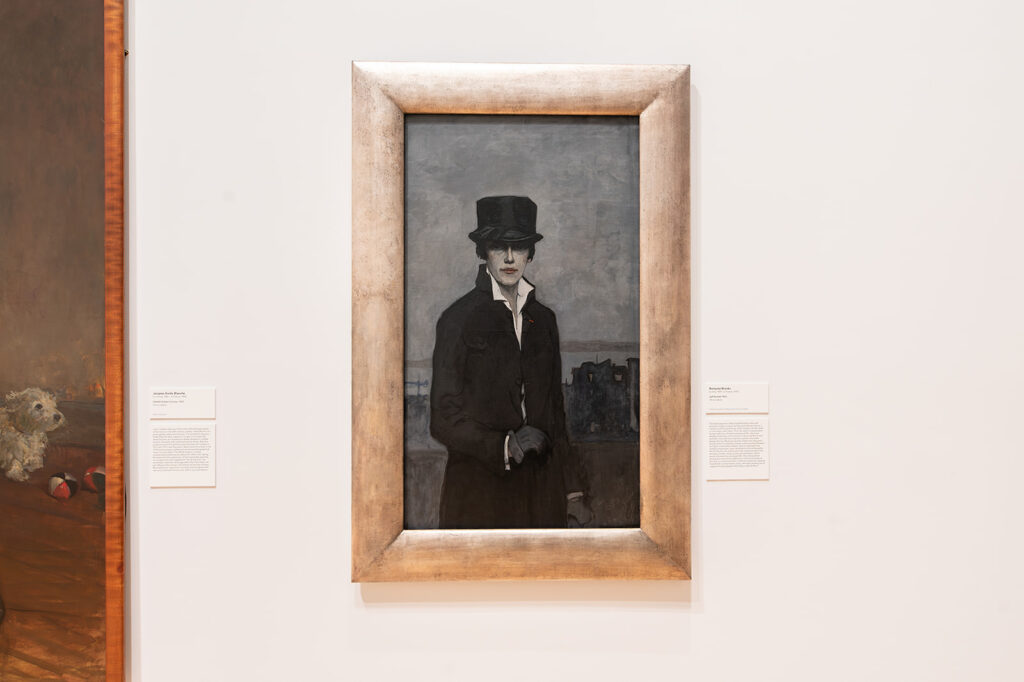
Installation view of The First Homosexuals: The Birth of a New Identity, 1869-1939, at Wrightwood 659, 2025. Photo courtesy of Daniel Eggert (@DesigningDan).
Though emerging from binary gender scripts, cross-dressing opens up possibilities and spectrums by allowing for individualized variations and departures from the binary in visual manifestations of identities.
Possum Yang is an educator at Wrightwood 659. They makes aesthetic footwear objects by hand, casts metal when nature wills it, and continues learning. Their making practice proposes a direction towards independence of the objects, while anthropocentric relations/assignments/associations recede.
End Notes:
- “The Cairo Photographer Whose Studio Became a Dream Machine.” Aperture, Accessed Mar 23 2025. https://aperture.org/editorial/the-cairo-photographer-whose-studio-became-a-dream-machine/.
- Whitney, Chadwick, Amazons in the Drawing Room: The Art of Romaine Brooks. Chesterfield, Berkeley, Washington: Chameleon Books : University of California Press : in association with the National Museum of Women in the Arts, 2000.
- Kira M, Cambell. “Romaine Brooks and the Drawing of Self.” Essay. In Athanor, 71–75. Tallahassee, Florida: Florida State University, 2000.