Educator Insight: Natalie on Photographic Portraiture
Photography has not always been considered art, nor have photographs always been considered to be “true”. However, in its infancy, photography was a technical medium; it was understood as a way of reproducing and documenting reality. (1)
There were two “camps” seeking to see photography accepted as an art form. These are the “direct” and “pictorialist” photographers. Direct photography leaned into the medium’s roots as a technical form, developing a sharp, detailed, and highly legible style which would later go onto become “straight photography”. (2) The pictorialists instead sought to make their photographs more like painting, using soft focus, multiple exposures, compositing, and print manipulation to create images that never were, nor ever could be. (3)
Holland Day’s untitled (nude youth by cave, with hands behind neck, and face of youth) (1907) is an example of the pictorialist style. The image is a double exposure rendered in soft focus, with Day’s assistant and model Nicola Giancola taking on the form of Orpheus. Emerging from the cave behind him, Giancola stretches his body out, baring his chest to the light. Here Orpheus seems not to lament the loss of his wife Eurydice, but instead luxuriates in the viewer’s gaze. Within the cave we see a ghostly figure, but again Eurydice is notably absent; it is Giancola’s side profile that seems to haunt the cave. Giancola is not only Day’s model, necessary to produce his images, but is also transformed into a double-figure: both Orpheus and the Ovidian Orpheus’ love object after his wife’s death. By trafficking in the aesthetics of painting Pictorialist photography was able to openly depict homosexual desire using the same strategies as Neoclassicist painters.
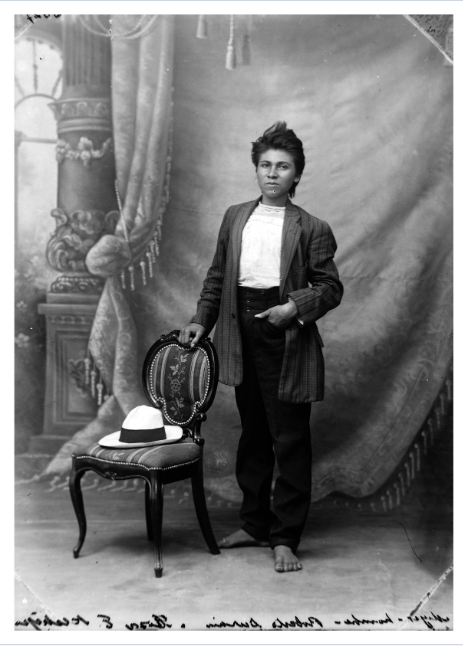
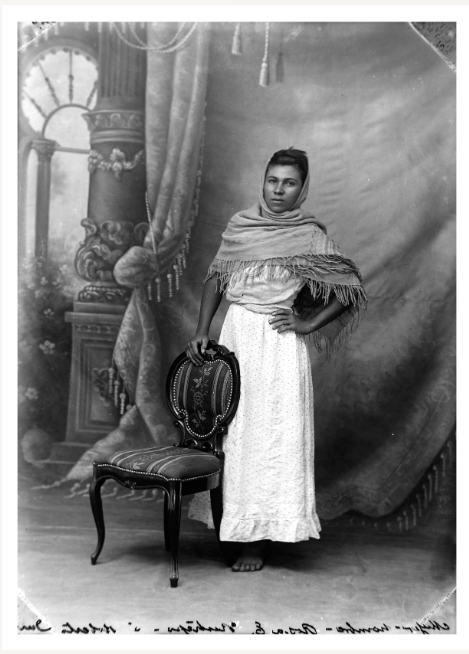
Benjamín de la Calle’s, Mujer (Woman) and Hombre (Man), (1912) are direct photographs. These show a subject presenting as a woman in one and a man in another, both in sharp detail. Where Day uses the camera to create a world that basks in homosexual eroticism by calling upon the aesthetic traditions of Western painting, de la Calle instead uses the camera to concretize non-conforming gendered performance. De la Calle’s camera is not the camera that creates worlds from our desires, but rather the camera that testifies to the world as it is. The titles, Mujer and Hombre, further reinforce the camera’s testimony. They say to us “this person is a man and a woman.” That is to say, this subject is both a man and a woman, and the camera produces the evidence to the truth of that claim.
Day and de la Calle’s photographic practices are undergirded by two different understandings of what the camera is and does. For Day photography is a medium that is able to bring desire and fantasy into the material world. As a result his work centers homoerotics, using historical imagery to imagine a reality in which such desires can freely flourish. For de la Calle, photography is able to document the world as it is testifying to reality. His photography instead uses the medium to assert the present reality as one in which gender queerness and homoerotics are real and cannot be repressed.
Endnotes
- Keller, Corey. “Sight Unseen: Picturing the Invisible.” in Brought to Light: Photography and the Invisible, ed. Corey Keller (New Haven, CT: San Francisco Museum of Modern Art in Association with Yale University Press, 2008), 19–35.
- Newhall, Beaumont. Foreword in Seeing Straight: the f.64 Revolution in Photography, ed. Therese Thau Heyman (Oakland, CA: The Oakland Museum of Art, 1992), VIII–IX.
- Smith, Shawn Michelle. “The Politics of Pictorialism: Another Look at F. Holland Day.” in At the Edge of Sight: Photography and the Unseen (Durham, NC: Duke University Press, 2013), 41.
Natalie Schoenbrunner is an educator at Wrightwood 659 and an artist and curator in Chicago who’s practice explores photography’s historic and contemporary role in producing systems of power. Her current work focuses on the relationship between American settler colonialism, land use, and survey & landscape photography.
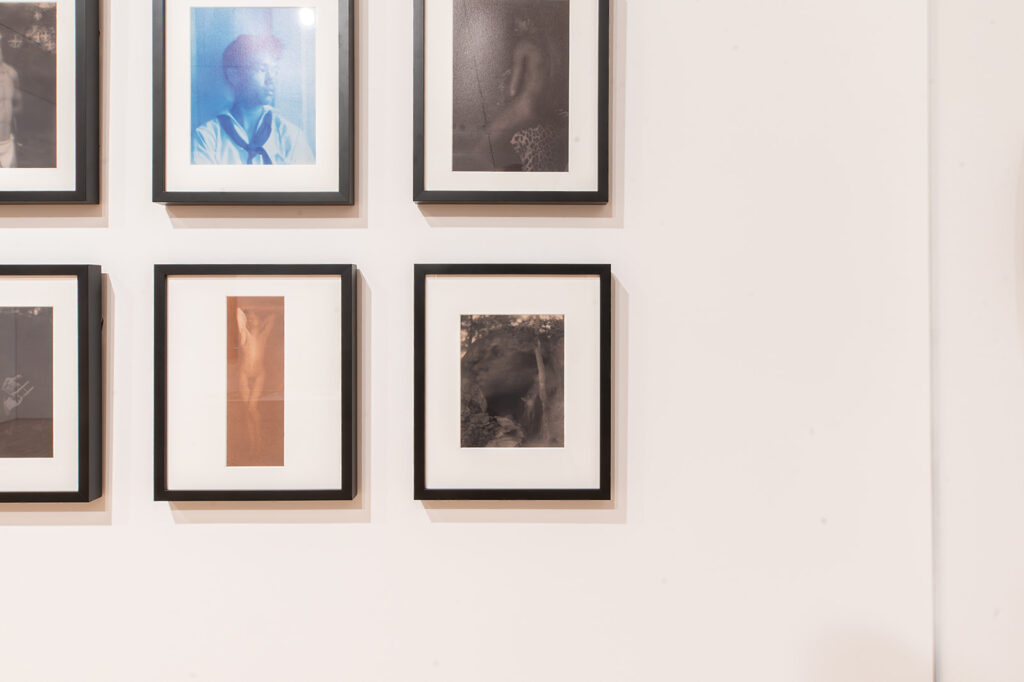
Installation view of The First Homosexuals: The Birth of a New Identity, 1869-1939, at Wrightwood 659, 2025. Photo courtesy of Daniel Eggert (@DesigningDan).
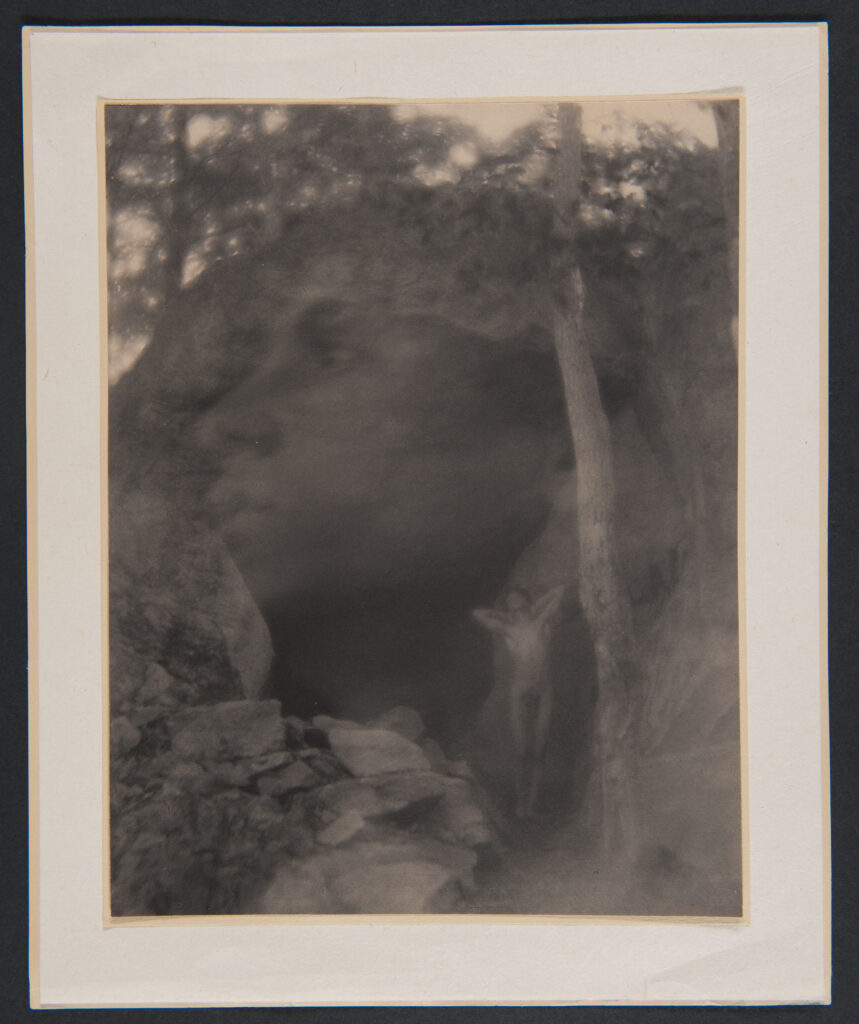
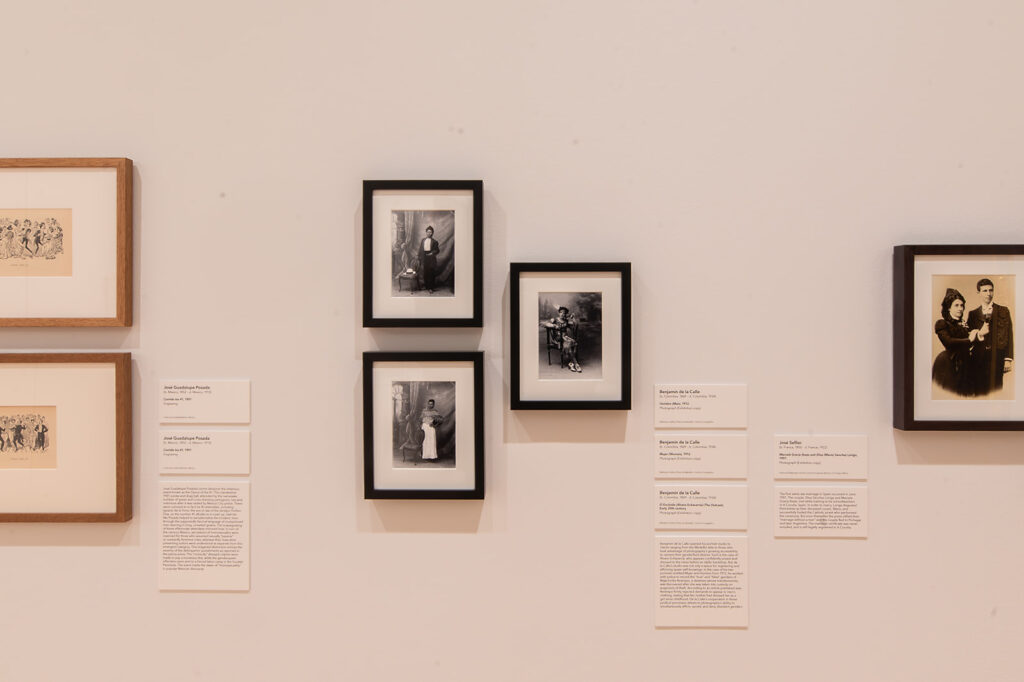
Installation view of The First Homosexuals: The Birth of a New Identity, 1869-1939, at Wrightwood 659, 2025. Photo courtesy of Daniel Eggert (@DesigningDan).