Educator Insight: Liv on Trans Narratives
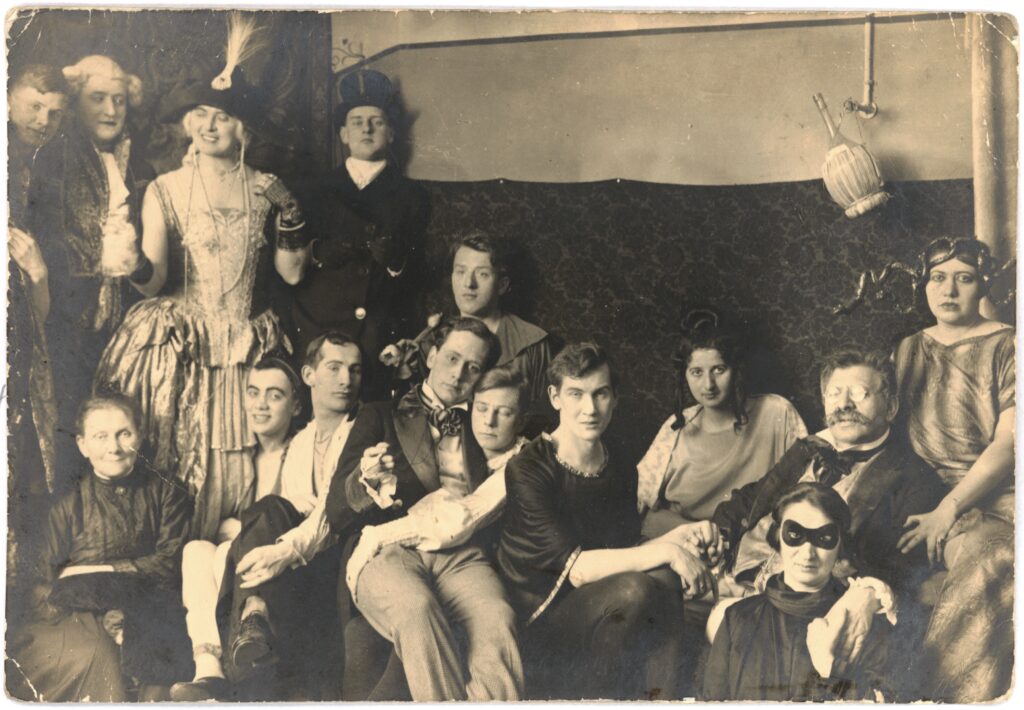
Trans* identities before and beyond the binary have persisted despite frequent attempts to silence or exterminate them. “Trans*” with the asterisk is used as a tool here, to note the uncertainty of gender-variant histories, the multitude of modern understandings of trans*ness, and the unknown trajectory of future trans* identities. (1) The violent erasure trans* narratives face historically extends from colonial exploits in the New World, to Nazi desecration of the Berlin Institute for Sexual Research (IfS), to contemporary pursuits limiting and annihilating trans* rights. Acknowledging the destruction of trans* histories and looking at representations of destruction helps us recognize patterns of behavior and different kinds of violence used against past diversely gendered peoples, aiding in the creation of a safer society for modern trans* existence.
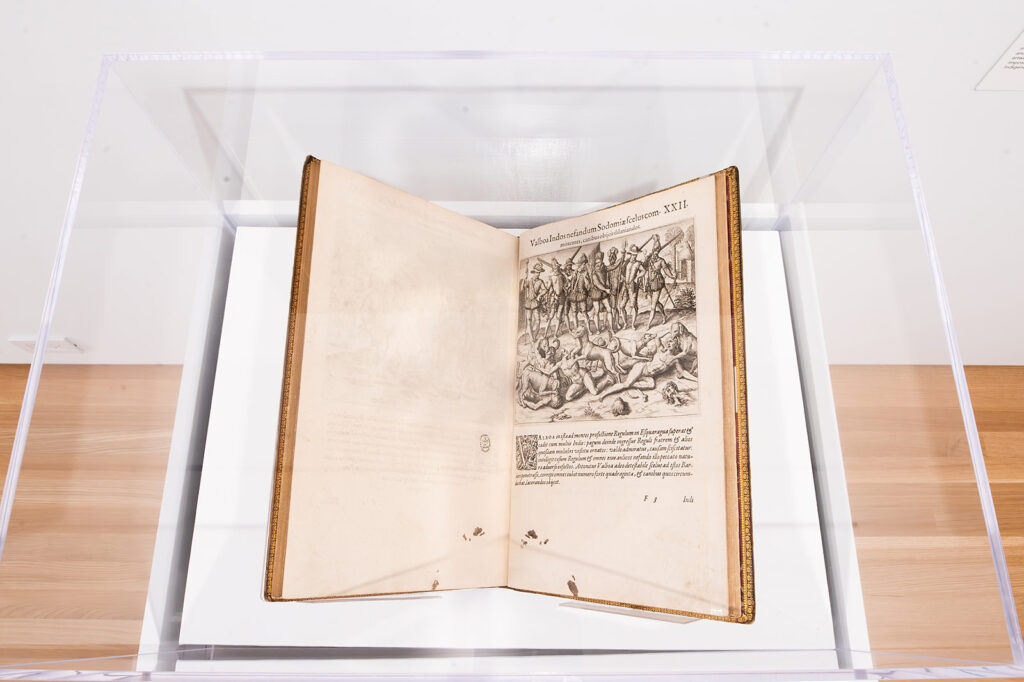
Violence before the binary can be seen in Theodor de Bry’s engraving Balboa’s Massacre of the Cueva. The vile treatment of “third-gender” individuals in the Americas is evident in the depiction of indigenous “men-dressed like women” being fed to mastiffs, for the entertainment of Spanish conquistadors. There is a casual cruelty in the colonizers leering over the bodies being ripped apart, heads scattered on the floor, with indigenous faces being the main target of the dogs. This is a later print of a 1513 event, as Vasco Nuñez de Balboa and his soldiers murdered and raped their way across modern Panama. The Spanish framed their act as a moral one that had positive impacts for native people, and the massacre of the 40 third-gender individuals becomes the first recorded instance of colonial violence specifically against trans* Indigenous peoples living outside the confines of Eurocentric gender ideals. (2)
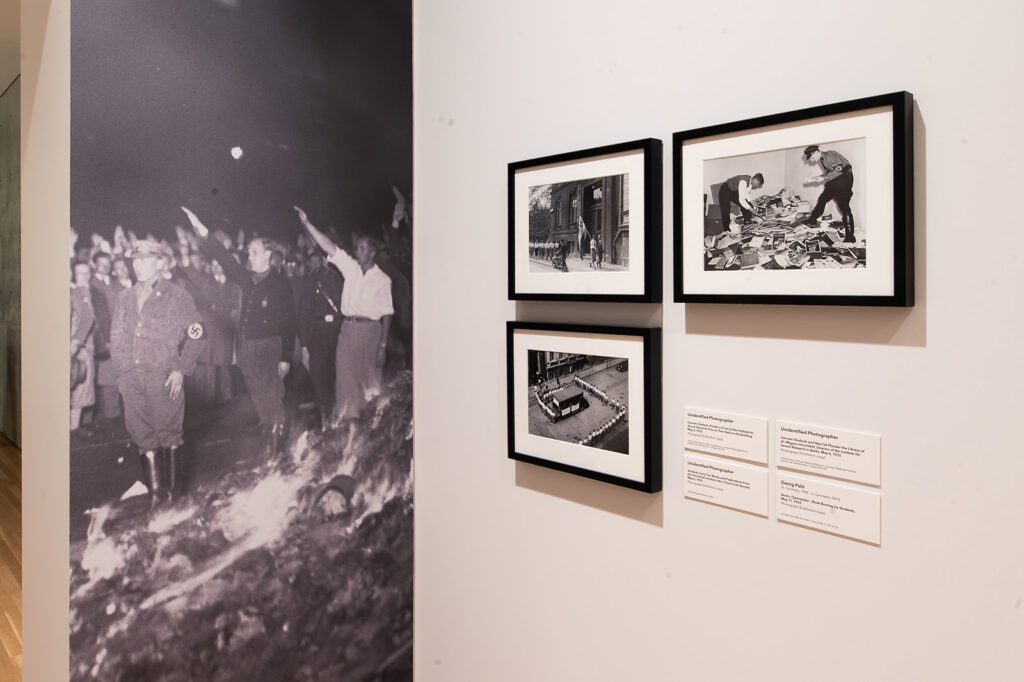
Installation view of The First Homosexuals: The Birth of a New Identity, 1869-1939, at Wrightwood 659, 2025. Photo courtesy of Daniel Eggert (@DesigningDan).
Endeavors beyond the binary in 20th-century Europe were met with similar violence to those Indigenous gender dissenters before the binary. In Nazi Germany, anti-trans* rhetoric “was inconsistent and lacked ideological clarity,” but was nonetheless violent and eliminatory. (3) This is clear through the extermination of queer peoples in concentration camps and the well-documented attack on the IfS by Nazi students on May 6, 1933. The Ifs was set up by the Jewish and openly homosexual sexologist, Magnus Hirschfeld, and gained international attention after the posthumous publishing of Lili Elbe’s book Man Into Woman. (4) With this increased popularity, the IfS became a Nazi target and anti-trans* sentiment became more systemic; transvestism was positioned as a threat stemming from “alien races,” depicting gender-non-conforming individuals as diseased and threatening to the Aryan empire imagined by Nazis. (5) Pictures of Nazi students flipping through pages of the books they planned to destroy during a May 10, 1933 rally demonstrate their morbid curiosity about the trans* knowledges they fervently eradicated. Like the conquistadors, Nazis found amusement in their trans* genocide.
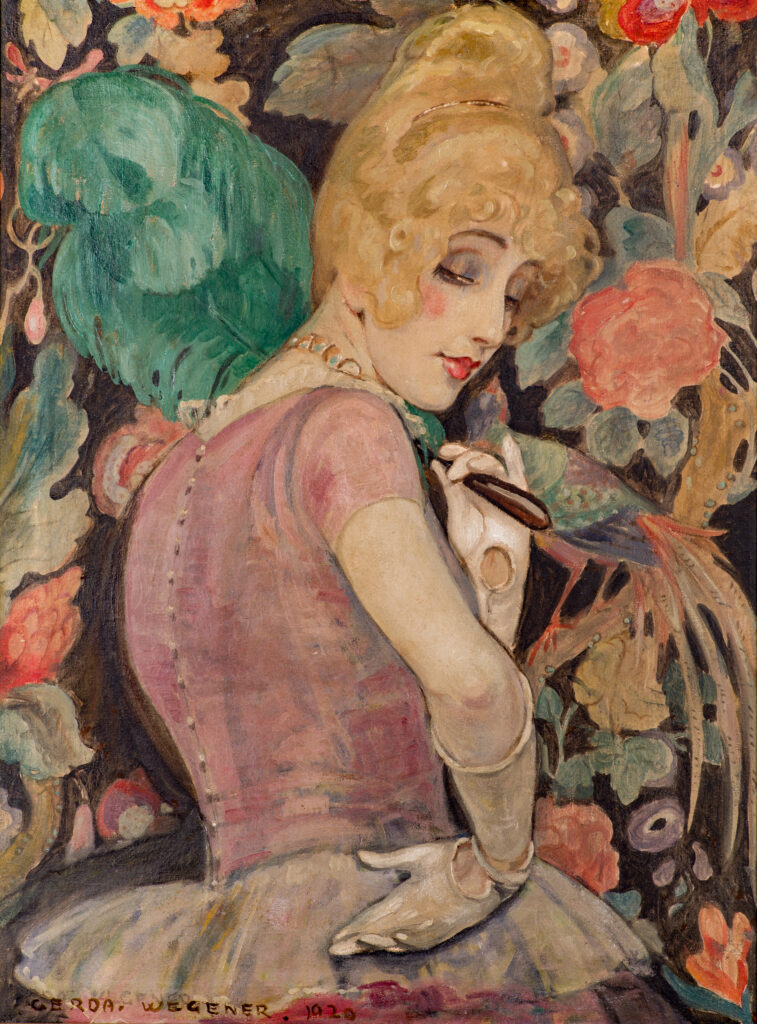
Gerda Wegener, "Lili with a feather fan," 1920, Oil on canvas, Oil on canvas, 79 x 59 cm, Private collection. Reproduction by Morten Pors Nielsen / © MORTEN PORS FOTOGRAFI. All Rights Reserved.
Reckoning with oppressed trans* pasts is often an uncomfortable, disturbing, and harrowing exercise, but these histories assert the longevity of trans* identities. Reflection on these violent depictions serves as a reminder to keep celebrating trans* pasts in the fight for a liberated trans* future, even as we endure an ever-unsettling trans* present.
Endnotes
- Halberstam, Trans*: A Quick and Quirky Account of Gender Variability (Oakland, California: University of California Press, 2018), 4.
- Jamey Jesperson, “ Trans misogyny in the colonial archive: Re-membering trans feminine life and death in New Spain, 1604–1821,” Gender & History 36, no. 1 (2024): 93.
- Matt Fuller, and Leah Owen, “Nazi Gender Ideology, Memoricide, and the Attack on the Berlin Institute for Sexual Research,” Peace Review (Palo Alto, Calif.) 34, no. 4 (2022): 533.
- Fuller and Owen, 531.
- Fuller and Owen, 531.
Liv Majetich is an educator at Wrightwood 659. He graduated from Loyola University Chicago in Spring of 2025 and is entering the Loyola Gender Studies graduate program in the Fall. His art historical interests lie in trans* and feminist artwork and activism, as he attempts to bridge gaps between queer theories, museum presentation, and queer artists.