Educator Insight: Ese on Florence Wyle and Frances Loring
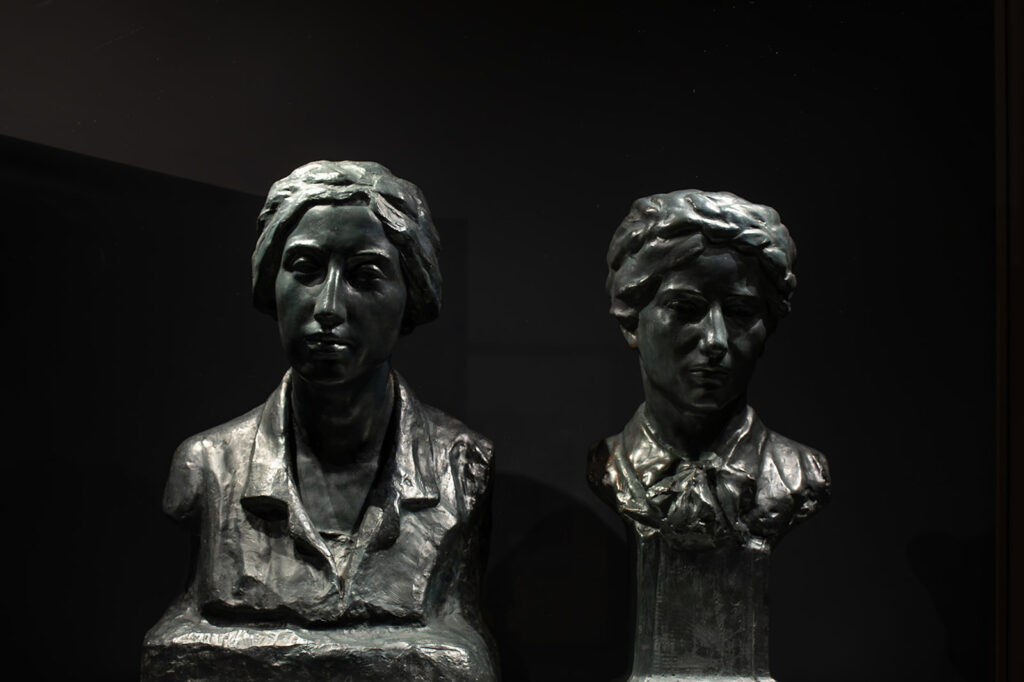
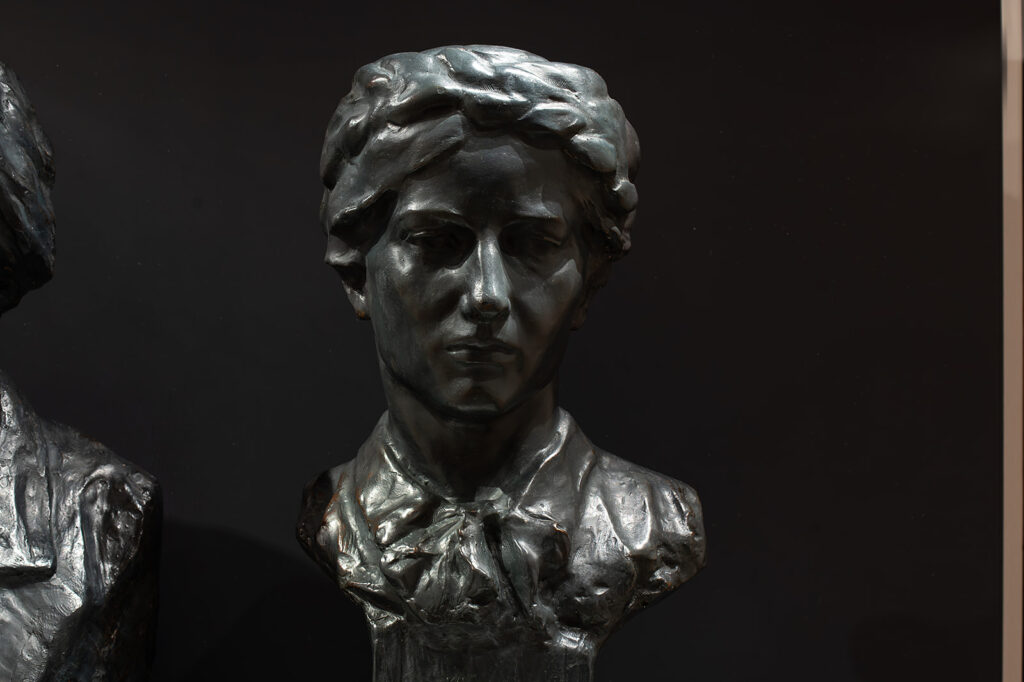
Sculptures Portrait of Florence Wyle (1911) by Frances Loring and Portrait of Frances Loring (1911) by Florence Wyle exhibit two women in states of comfortability, presumably in the presence of their lover. Their gazes are infinitive, a sense of yearning as pure and delicate as the care allocated to the sculpting of each other’s essence. Wyle and Loring, lifelong lovers, crafted these reciprocal portraits of each other, immortalizing their sapphic love. There were no letters left behind, only their life together, and life’s work. These two works seek to represent affections that could not be stated at the time. The absence of explicitly acknowledging something does not truly signify that it lacks existence.
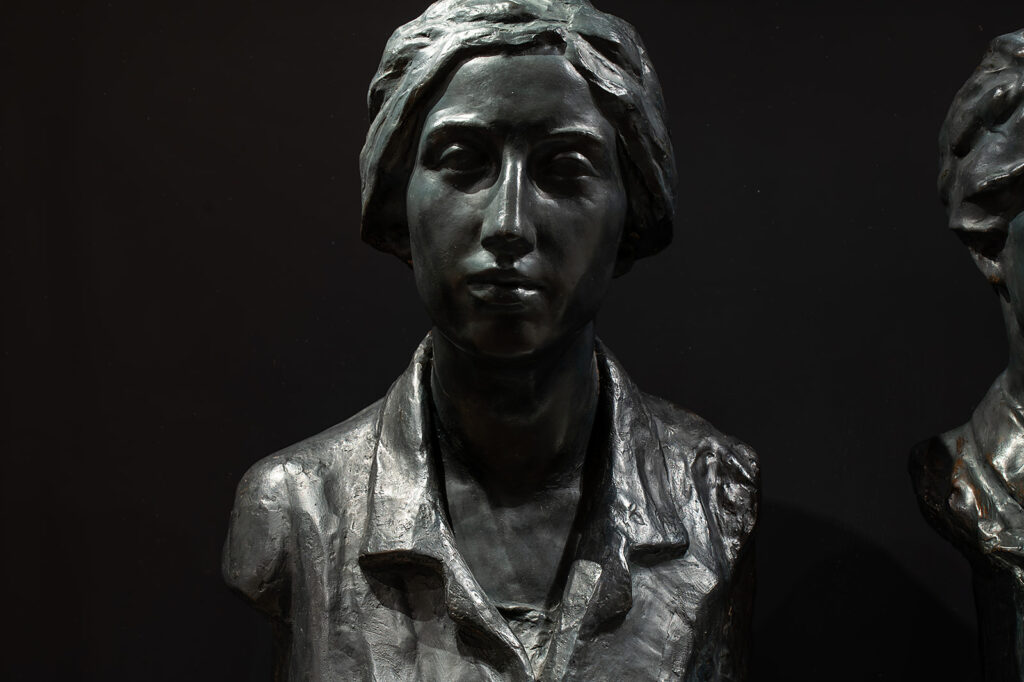
Florence Wyle and Frances Loring were both Canadian artists who met while studying sculpture at the Art Institute of Chicago, moving to Toronto in 1912. The term “lesbian” was still gaining definition during this time. Same sex intimacy between women was of less public concern than between men, until being identified as a crisis in 1928. (1) The two remained lovers for six decades until their respective deaths in 1968. Categorizing women’s intimacy as “romantic friendship” was common practice, and same sex couples lived together long term as if they were married without legal recognition. In the two sculptures, there exists a noble, but honest presence. The works were sculpted five years into their relationship and marked a decisive moment in their lifelong devotion to each other. (2) Additionally, the reciprocal artworks were created in the opposite artist’s practice. Loring’s depiction of Wyle emerges from a plinth, Wyle’s sculptural practice. While her portrait of Loring remains synonymous with the plaster foundation. The two took this artistic opportunity to craft each other’s likeness as an act of service.
As homophobia and queer erasure permeate histories, artists took initiative to exhibit their desires, fantasies, and sexual expression in and through their art forms. This expression risks art historians misinterpreting them as merely interests, or rather sexual deviance. In the Early 1900’s, the idea that lesbianism was contagious and simultaneously a congenital illness was widely spread in Western countries. Homophobic sexologists and psychiatrists worked towards the pathologizing of female homosexuality as a “dangerous perversion of natural will” in medical and social spheres.(3) Avoiding to state one’s sexuality puts distance between one and the accusations of character prompted by the heteronormative ideas of their societies’ norms. Florence Wyle and Frances Loring’s reciprocal portraits refute heteronormative society and the disparaging of homosexuality in the popular imagination. Both portraits are resilient, possessing a sort of mundaneness in their simplicity, and manifesting a future of domesticity with each other.
Endnotes
- Johnny Willis, “Not Naming: Lesbian Canadian Art and Its Erasure,” in The First Homosexuals: ed. Jonathan Katz, Johnny Willis (Chicago: Monacelli Press, 2025), pg 208-212.
- Ibid.
- Ibid.
Ese Gagoh is an educator at Wrightwood 659 and a Chicago based artist with focuses in photography, music production, film, and printmaking. Themes of religion, ritual, queerness, relationships, and nature loom throughout their work, seeking to bring forth a sense of tranquility and togetherness.