Educator Insight: Will on Scott Burton as Curator
Scott Burton’s curatorial perspective was rooted in his early awareness of class distinctions within social spaces. He knew at a young age that he was gay, and as the child of a single working mother in the south, he became familiar with the alienation attributed to nonnormative living. In high school, he and his mother moved to Washington D.C. where he was introduced to modern furniture design in the homes of his wealthier classmates. This observation of furnishing as a signifier of elitism further solidified Burton’s intrigue in social signaling.
While best remembered as a sculpture and performance artist, Burton began his career as an art critic in the mid to late 60s. His analysis of art and exhibitions gave early insight into the interpretive perspective he would later develop as an artist himself. His writings focused on works that evoked emotive responses, chafed at the authoritarianism of minimalism, and centered ephemeral relationships between viewer and object. (1)
Burton’s work in the 1970s redefined how audiences engaged with art by transforming both objects and installation spaces into participation sites. Through functional sculptures like benches and chairs and site-specific performances he positioned the viewer as both commentator and participant. He argued that exhibitions can function as facilitators of dialogue about taste, social values, and the role of art in our lived experiences.
In 1975, Burton installed Bronze Chair– a bronze cast of a 19th-century-inspired chair– on a sidewalk across the street from Artists Space, an alternative arts organization in New York City. Burton was interested by the class shift of the chair and the later shift of the bronze cast from its high-brow association with neoclassical furniture to the middle-class representation of mass reproductions. (2) The sculpture’s placement also called into question the classification of exhibition spaces. Passersby could sit, touch, ignore, or even attempt to take the chair as an item that had been left up for grabs by a previous owner. The museum was the sidewalk, and the audience participation, the art. This piece tackled many of Burton’s core thematic attitudes: object as subject, viewer commentary and accessibility, and the muddling of class within the art world.
While his curatorial perspective was heavily influenced by his identity as both a critic and artist, it’s important to note the central force of all his work: queer cultures. He utilized his own queer experiences as a way to propose potential modes of resisting and declassifying behavioral expectations. (3) His need to understand the cultural and psychological nature of social performance was rooted in his aim to dissolve the distinctions between categories of cultural production- who could enjoy art, where it could be displayed, and what conversations it could encourage. Burton’s performance and sculptural furniture recontextualized the expectations of museums and galleries as social agents and his exploration of public art iterated Burton’s desire to bring art to everyday aspects of life.
Notes:
- Getsy , David J. “Scott Burton’s Queer Postminimalism .” Introduction. In Queer Behavior: Scott Burton and Performance Art, 1–62. Chicago, IL: The University of Chicago Press, 2022.
- Rondeau, James E. “Bronze Chair, Designed 1972, CAST 1975 by Scott Burton.” Art Institute of Chicago Museum Studies 25, no. 1 (1999): 46. https://doi.org/10.2307/4112992.
- Getsy, “Scott Burton’s Queer Postminimalism .” Introduction.
Will Ramirez is an educator at Wrightwood 659 with a background in Curatorial Studies and Architecture from Columbia College Chicago. They work as a freelance art handler and multimedia artist who hopes to one day curate and own a gallery of their own that also doubles as a fabrication facility.
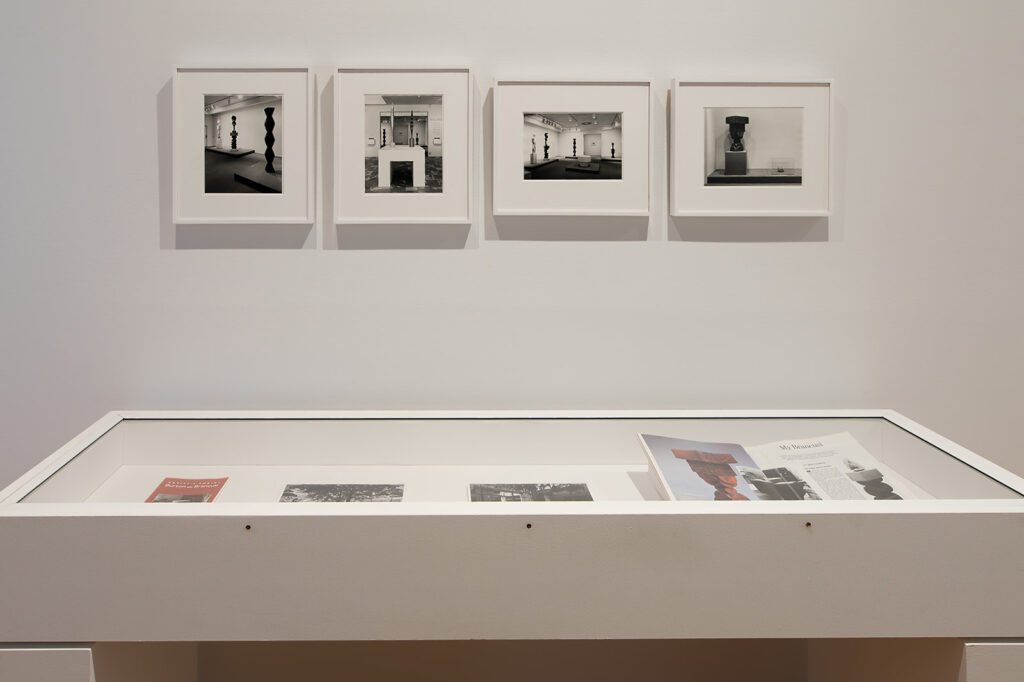
Installation view of "Scott Burton: Shape Shift, at Wrightwood 659", 2025. Photo courtesy of Daniel Eggert (@DesigningDan).
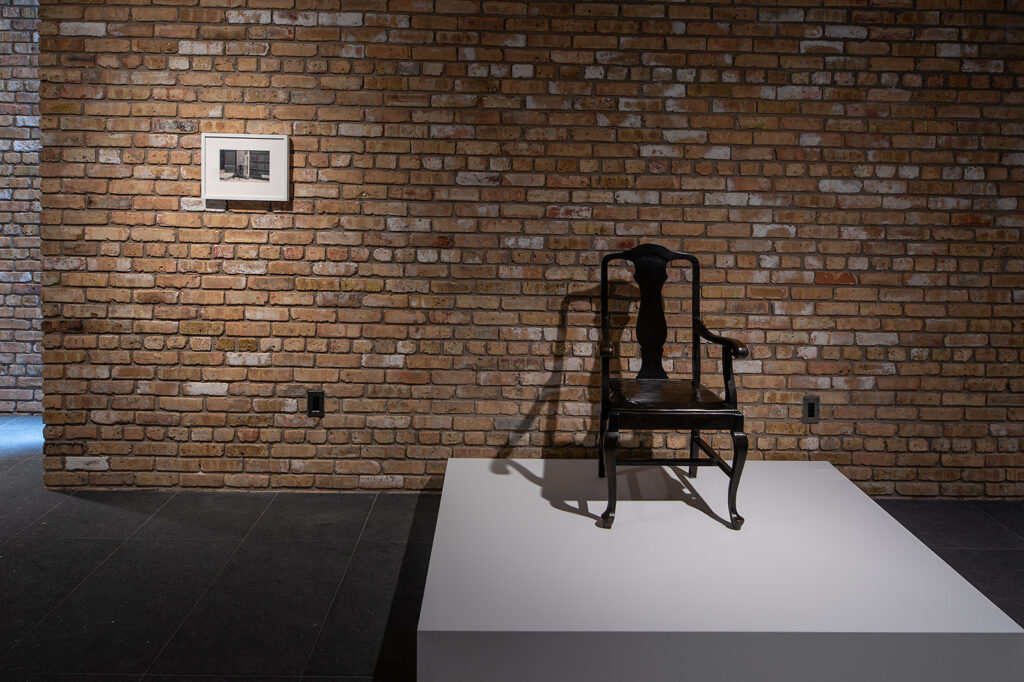
Installation view of "Scott Burton: Shape Shift, at Wrightwood 659", 2025. Photo courtesy of Daniel Eggert (@DesigningDan).
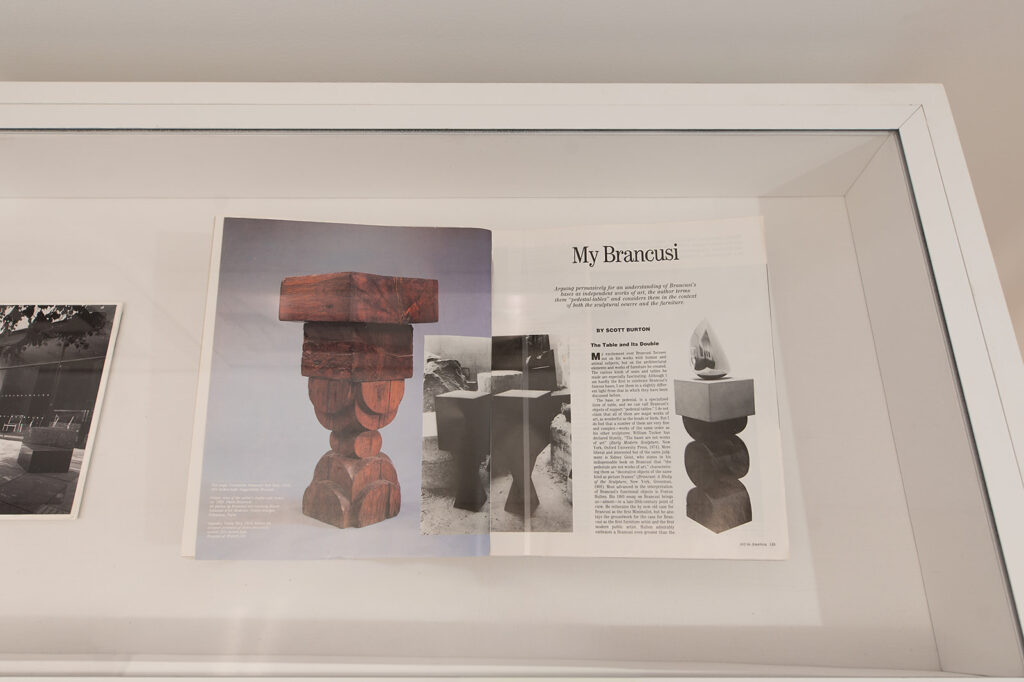
Installation view of "Scott Burton: Shape Shift, at Wrightwood 659", 2025. Photo courtesy of Daniel Eggert (@DesigningDan).
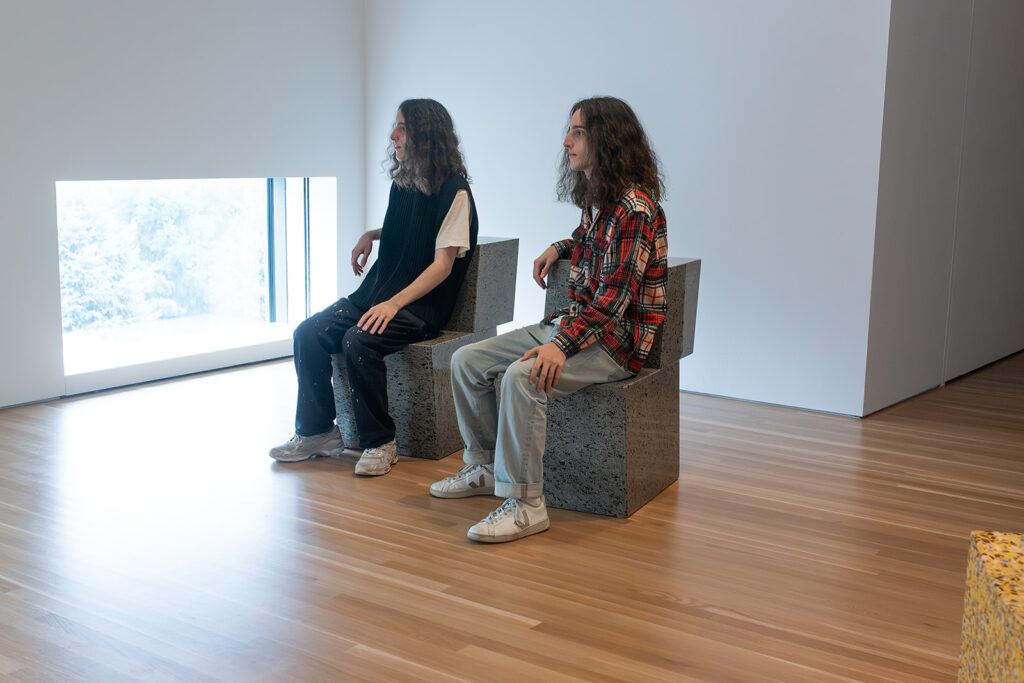
Installation view of "Scott Burton: Shape Shift, at Wrightwood 659", 2025. Photo courtesy of Daniel Eggert (@DesigningDan).