Educator Insight: Taylor on Gerald Arpino's "Trinity"
As one of the company’s founding members, Gerald Arpino created Trinity during The Joffrey’s residence at The University of California, Berkeley in the summer of 1970. The piece showcased a prioritization of openness and modernity that would come to define the Joffrey Ballet.
The three main dancers in Trinity, Christian Holder, Dermot Burke, and Gary Chryst, each embodied a different social experience. They represented a spiritual awakening, a sexual revolution, and political defiance, respectively. As such, the choreography sought to convey the fervor of the sixties. Visual cues arise at different points throughout; Chryst, for example, performs a sequence of sharply raised fists, mirroring scenes of protest in the streets. In the words of Christian Holder, “we were encouraged to improvise, to use steps that we used socially at discotheques and things like that, and then [Arpino] would edit it.” (1)
Arpino often commented on the importance of speaking to the contemporary moment. Never a solitary act, his choreography and later work as the Artistic Director of the Joffrey Ballet was always in conversation with the next person, place, or thing. Arpino was particularly concerned with the neglect of young peoples’ voices at the time of Trinity’s production. Asking that his dancers contribute to the making of the piece through improvisation further illuminates the strength of his conviction that the most powerful art is built upon a thoughtful consideration of current events and varied perspectives. He commands and directs the attention of the audience toward politics in an unconventional way, by first captivating them with the force of his choreography. Dance is democratized as a diverse cast of performers mobilize on stage to give artistic form to the most pressing issues of the time.
Trinity concludes with a sequence honoring those lost in the Vietnam war. The dancers come together to place a large group of votive candles, and the soundtrack mimics the rhythm of a heartbeat as they step together in sync. This moment in the dance not only speaks to the ubiquity of death, grief, and mourning in the sixties and seventies, but suggests that remembrance is a shared and ongoing responsibility. Of course, history is ongoing, and the years following the piece’s debut were characterized by more challenges, more unrest, and more loss, all met with similar inaction. Arpino stated in a 1991 interview, “I think what the world needs are more artists, because we know where it’s at.”(2)
By foregrounding the spirit of the youth and the times in all of his work, Gerald Arpino created something that simultaneously speaks to a particular moment and transcends time altogether. Trinity continues to show us the importance of inclusivity and progressivism in the space of dance, the arts, and society at large. The themes of youth protest and memorial-making that the piece is built upon are ever-present, and the dance gives life to the idea that the collective makes the way forward.
Notes:
- “The Making of ‘Trinity’: A Ballet that Met the Moment,” https://www.youtube.com/watch?v=dIV1oI3j8Mg
- Charlie Rose, host, Charlie Rose “Crisis in Haiti; Teaching Ballet; Michael York,” November 26, 1991, 56 min., 23 sec., https://archive.org/details/Charlie-Rose-1991-11-26?start=1475
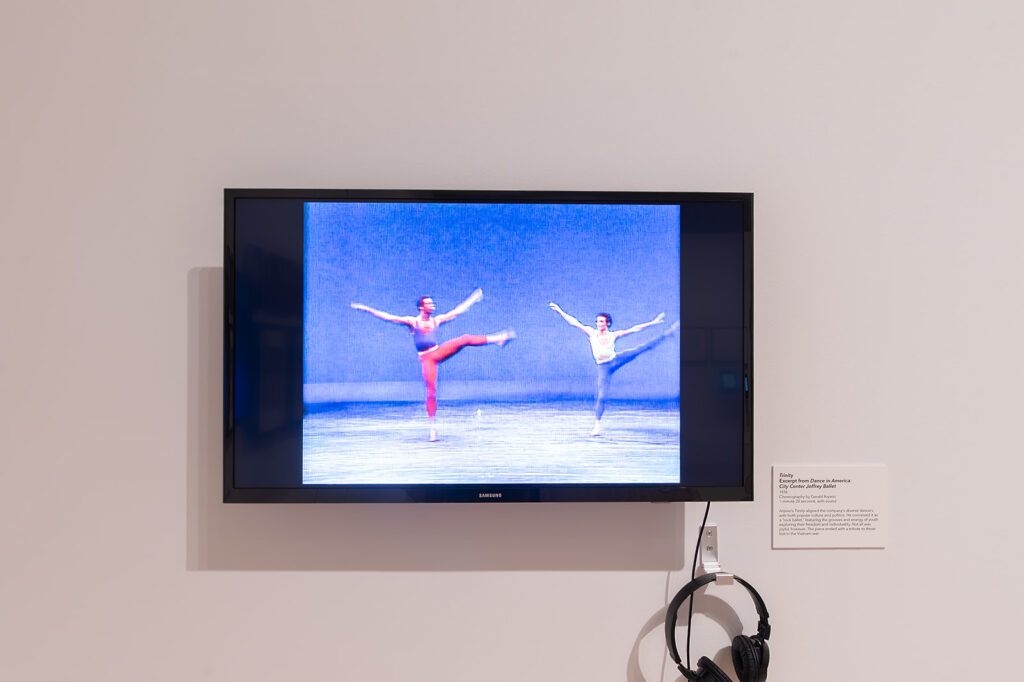
Installation view of "The Joffrey + Ballet in the U.S", at Wrightwood 659, 2025. Photo courtesy of Daniel Eggert (@DesigningDan).
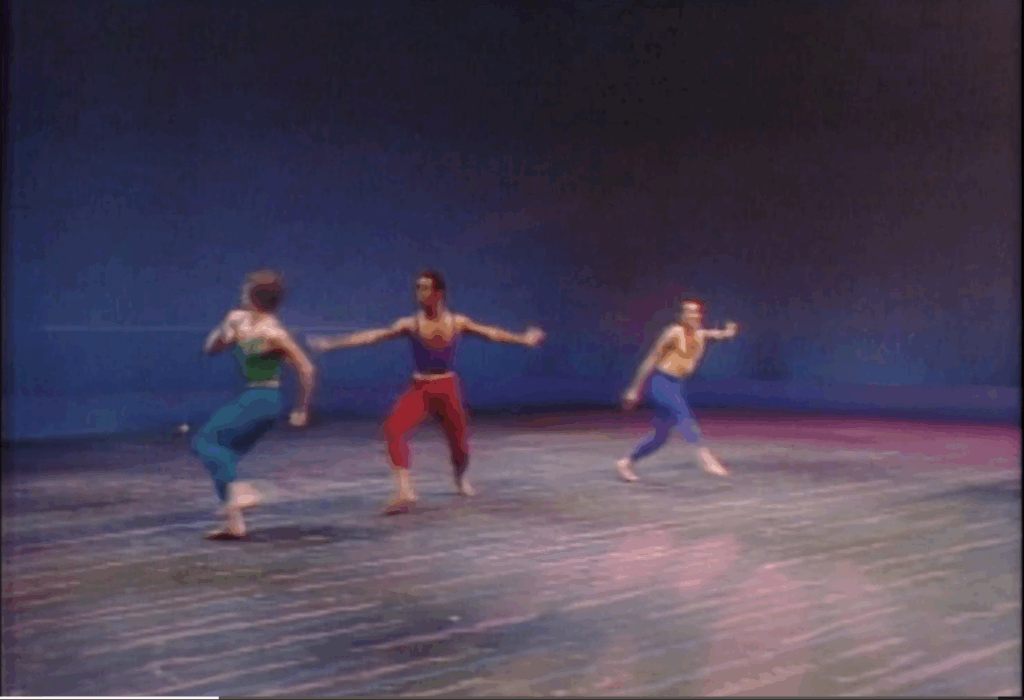
Still from video documentation of "Trinity", 1976. Jerome Robbins Dance Division.
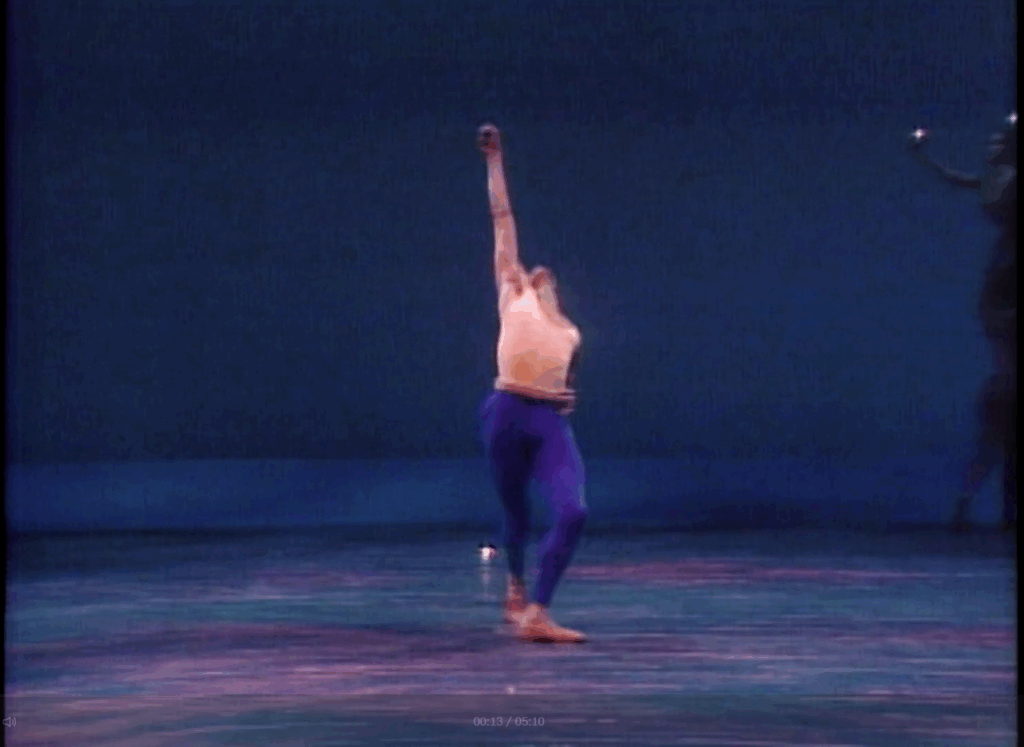
Still from video documentation of "Trinity", 1976. Jerome Robbins Dance Division.
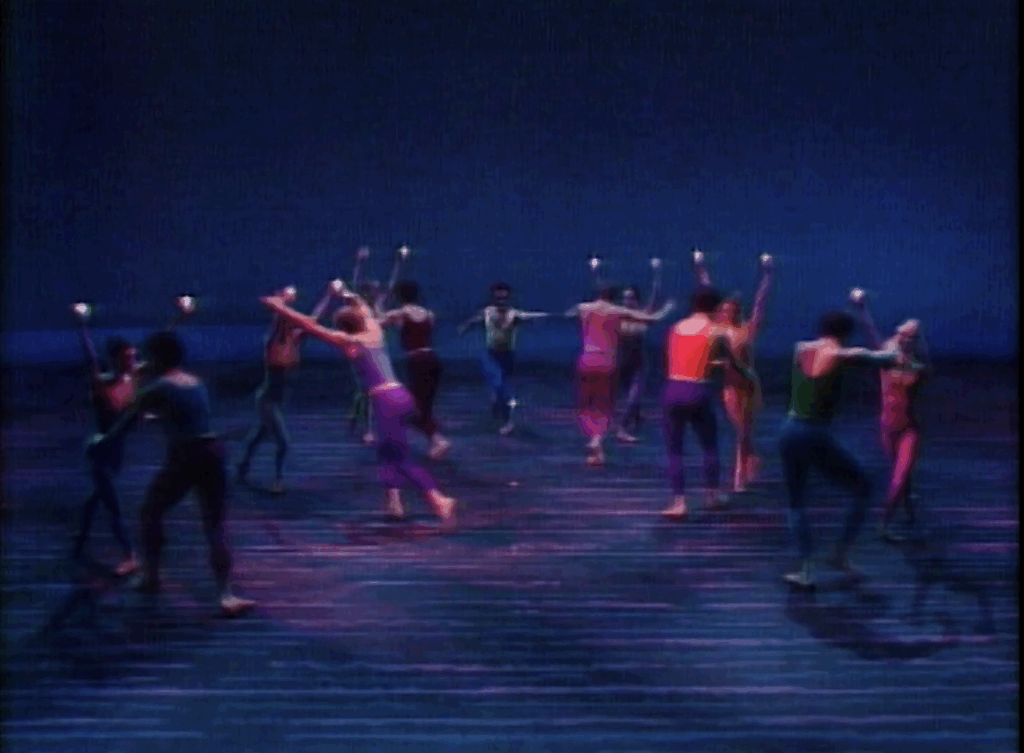
Still from video documentation of "Trinity", 1976. Jerome Robbins Dance Division.
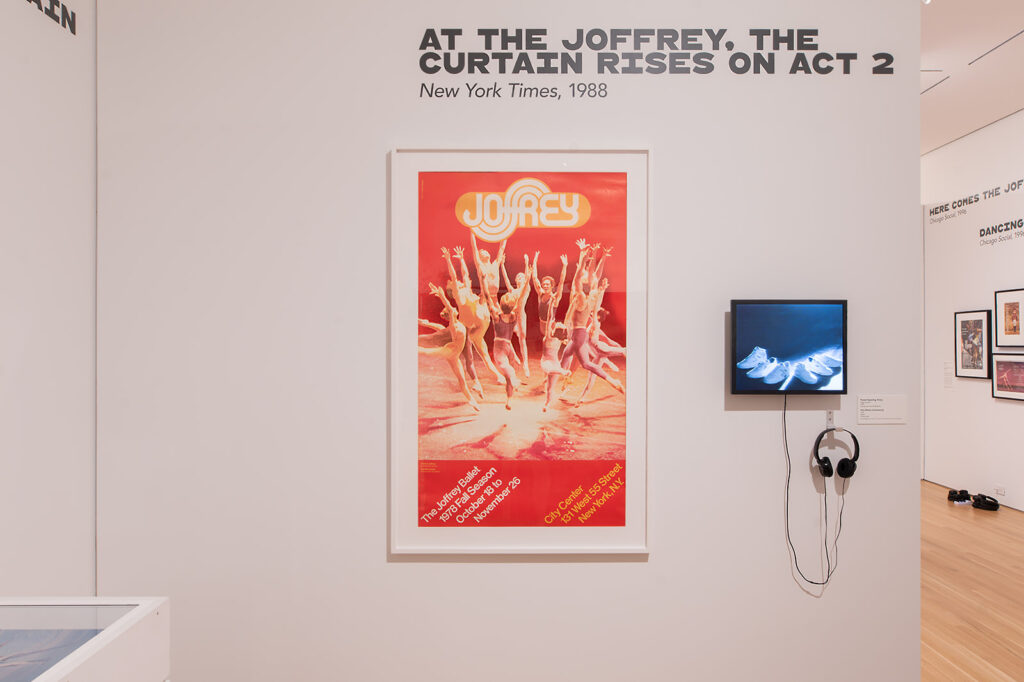
Installation view of "The Joffrey + Ballet in the U.S.", at Wrightwood 659, 2025. Photo courtesy of Daniel Eggert (@DesigningDan).