Educator Insight: Patrick on Edward Stierle
From the onset of the AIDS crisis in the 1980s, individuals living with HIV and AIDS, especially queer men, faced a homophobic stigma that continues to this day. The Joffrey Ballet community was not spared; many prominent members of the company had to endure the physical and mental anguish of their positive diagnosis. HIV-positive members demonstrated various levels of comfort in sharing their status; while some members of the company were candid, others kept their status private. This included Robert Joffrey himself, who succumbed to AIDS in March 1988 at the age of 59.(1)
One of the rising stars of the company, Edward Stierle, chose to process Joffrey’s death and his own positive HIV status through choreography and visual narrative in a work titled Lacrymosa.(2) The full-scale ballet, which was choreographed by Stierle just one year after his diagnosis and premiered in 1991, featured the music of Mozart’s Requiem, setting an overwhelmingly melancholic tone with the intention of enveloping the audience in a visual cloak of emotional fatigue and malaise.
Throughout Lacrymosa, Stierle manipulated the influx of crescendo in Mozart’s work, while simultaneously embracing the juxtaposition of breath and stillness against the brash rigidity of stylized body shaping. This clashing interplay represented Stierle’s internal struggle with acceptance and rage. He allowed the audience and his colleagues to immerse themselves in the experience of accepting death while crafting one of the most celebrated productions of his career. The muted color palette—beige, white, dark green, and black—is intentional, acting as a stark backdrop that allows the production’s emotional narrative to take center stage. Stierle incorporates the repetitive use of the shoulder stand, acting as an anchor of strength and resilience for the lead dancers. Critics praised both the work’s raw and unfiltered candidness and Stierle’s visceral attachment to the subject matter.
The last of Stierle’s works, titled Empyrean Dances, served as his most spiritual piece. As one member of the company asserted, “Where Lacrymosa was about death, Empyrean is about celebration and hope.”(3) The ballet was set to Howard Hanson’s Concerto in G for Piano and Orchestra, and was intentionally “set in a destroyed place.”(4) As Stierle explained, amidst the architectural ruins, “The dancers complete these sculptures and create new shapes from the shapes that are already there. These people are the destroyed place, and they are rebuilding it with their spirit.”(5) Unfortunately, as rehearsals for the ballet progressed, Stierle developed pneumonia and his condition worsened. On the night of the premiere for Empyrean Dances, Stierle left his hospital bed in a wheelchair with his oxygen mask to sit in the audience. At the curtain call, he refused assistance as he bowed, alone. Deborah Dawn, a principal figure in Empyrean Dances, recalls, “That night was the first time we had ever seen him incapacitated. When the curtain came down, Eddie turned to us and said, ‘I made it.’ He always loved being able to say that.”(6) Stierle died just three days later at the age of 23.
Notes:
- Terry Teachout, “Choreographing His Own Death,” Wall Street Journal, January 20, 1995, pg. A10.
- Berman, Janice, “‘Lacrymosa’: A Portrait Of Life, Death,” Newsday, March 1, 1991, pg. 94.
- Solway, Diane, “DANCE; Mustering Creative Power in the Face of Death,” New York Times, March 24, 1991, Section 2, pg. 6.
- 4 Berman, Janice, “Reaching Into Deep Soul Places: Edward Stierle’s works are his answer to a ‘wake-up call’: AIDS,” Newsday, February 24, 1991, pg. A17.
- Berman, Janice, “Reaching Into Deep Soul Places: Edward Stierle’s works are his answer to a ‘wake-up call’: AIDS,” Newsday, February 24, 1991, pg. A17.
- Solway, Diane, “DANCE; Mustering Creative Power in the Face of Death,” New York Times, March 24, 1991, Section 2, pg. 6.
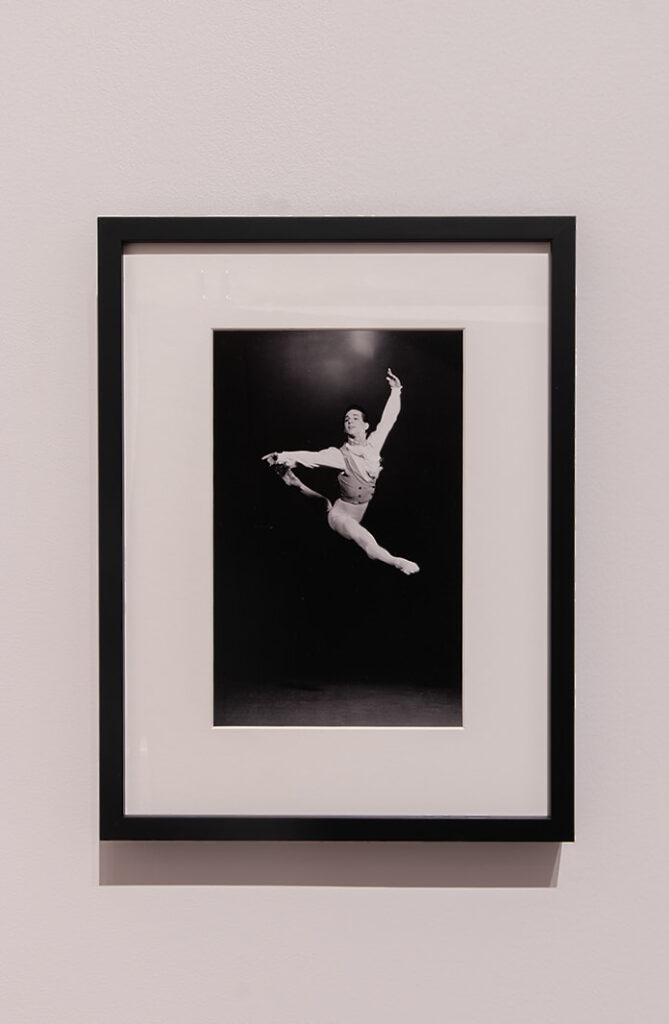
Installation view of "The Joffrey + Ballet in the U.S.", at Wrightwood 659, 2025. Photo courtesy of Daniel Eggert (@DesigningDan).
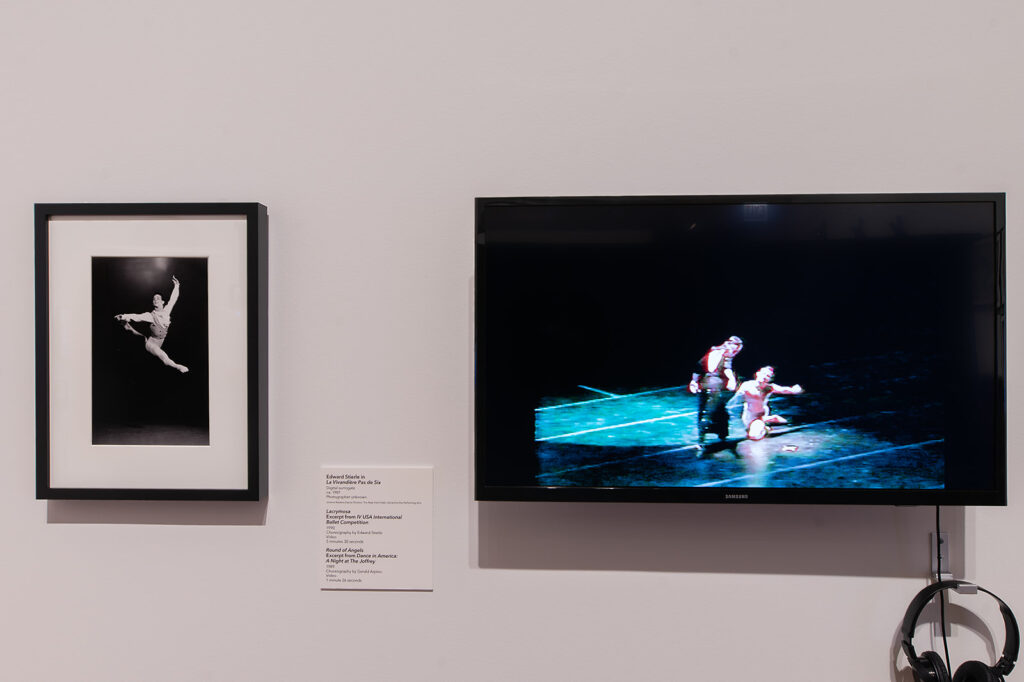
Installation view of "The Joffrey + Ballet in the U.S.", at Wrightwood 659, 2025. Photo courtesy of Daniel Eggert (@DesigningDan).