Educator Insight: Haemin on Ellen Altfest and Painting Men
When asked why she first began painting men, Ellen Altfest replied that she “couldn’t stop [herself] from doing it.”(1) Her painting process—layering minute brushstrokes over several months—might appear like a steady march towards a fixed endpoint. Yet Altfest’s paintings of men are not confirmations of a predetermined image but earnest pursuits of discovery, driven by an impulse to understand the male body through sustained, almost devotional looking.(2)
While some have linked Altfest’s work to the “female gaze,” a supposed reversal of the objectifying male gaze, her motivation for painting men resists such categorization, even as an acute awareness and manipulation of looking pervade her paintings.(3) In Torso, for instance, the model stands naked with his arms at his side as Altfest rakes each inch of flesh, recording every hair, crease, and blemish—from sullen nipples pointing askew to a belly button sunken beneath a whirlpool of hair. The resulting image is charged with the intensity of prolonged observation.
In viewing these paintings, we adopt Altfest’s gaze, only to find her subjects unable to return it. In Head and Plant, the model’s face is obscured by rugged vertical streams of cacti; in Torso and The Back, the models are beheaded entirely by the canvas’ crop. Deprived of facial cues, our habitual search for emotion through glossy eyes or the curve of a lip is interrupted. This occlusion compels us to look elsewhere: to the texture of skin, the rhythm of body hair, or the dialogue between flesh and spiny plant. The nude body, long the object of erotic conquest in art history, is reoriented within a wider ecology of forms. Pale bluish veins course with the same life force as outstretched roots, and a hairy chest echoes the wiry chaos of tumbleweed.
Altfest herself admits that her early attempts to “downgrade” men by placing them among still lifes failed(4); the project evolved as her looking deepened. To observe anything for so long is to see it mutate and lose its obviousness. A form once familiar becomes disorientingly strange. In this sense, Altfest’s practice resists predetermined closure. Painting is a means of gradually unearthing visual information embedded deep within her object of study.
This investigative lens distances Altfest from the binary discourse of the male versus female gaze. Rather than defining her practice solely in opposition to men’s work of the past, she adopts an archaeological mode of looking that emphasizes discovery. Altfest does not reject the body’s associations with power or eroticism but broadens them, approaching the male form as a site of excavation whose fragments can be reassembled within a wider network of material and perceptual relations. Her paintings invite us to slow down, resist the mechanical speed of habitual vision, and look without presumption.
- Ellen Altfest, “Ellen Altfest in Conversation,” interview by Sherman Sam, Ocula, February 15, 2019, https://ocula.com/magazine/conversations/ellen-altfest-in-conversation/.
- Altfest, “Ellen Altfest in Conversation.”
- Ellen Altfest, “ELLEN ALTFEST with Phong Bui,” interview by Phong Bui, The Brooklyn Rail, March 7, 2019, https://brooklynrail.org/2019/03/art/Ellen-Altfest-with-Phong-Bui/.
- “Ellen Altfest: Forever Opening Conversation,” posted August 1, 2025, by Frist Art Museum, YouTube, 39:00 to 40:00, https://www.youtube.com/watch?v=3C6NZanqdao.
Haemin Kim is an educator at Wrightwood 659 and a provenance researcher at the Art Institute of Chicago. She earned her B.A. in Art History and East Asian Languages and Civilizations from the University of Chicago.
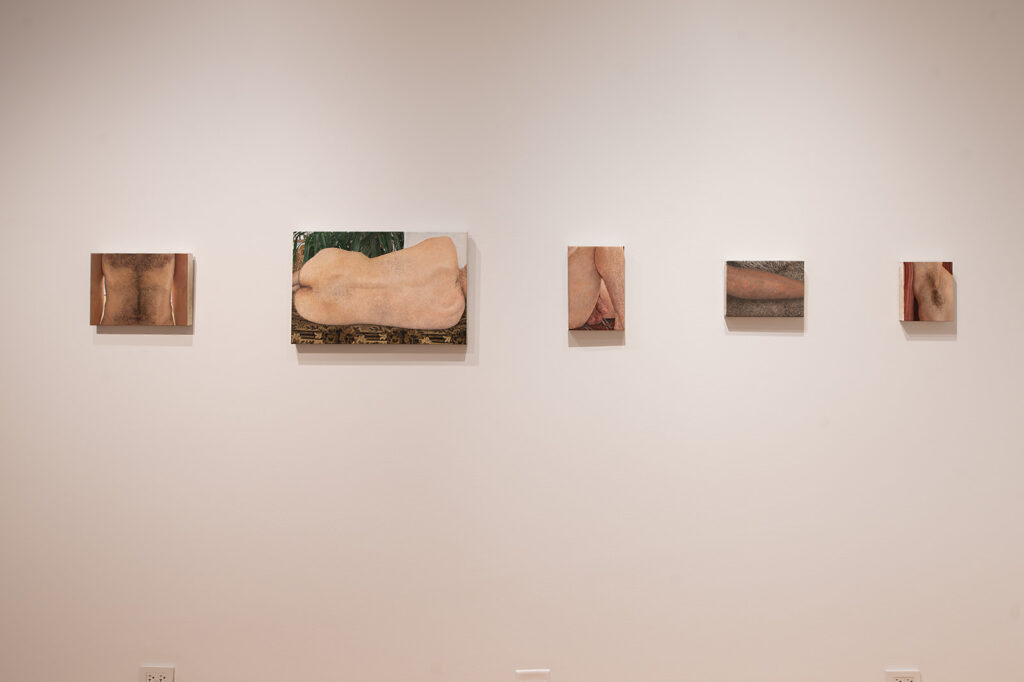
Installation view of Ellen Altfest: Forever, at Wrightwood 659, 2025. Photo courtesy of Daniel Eggert (@DesigningDan).
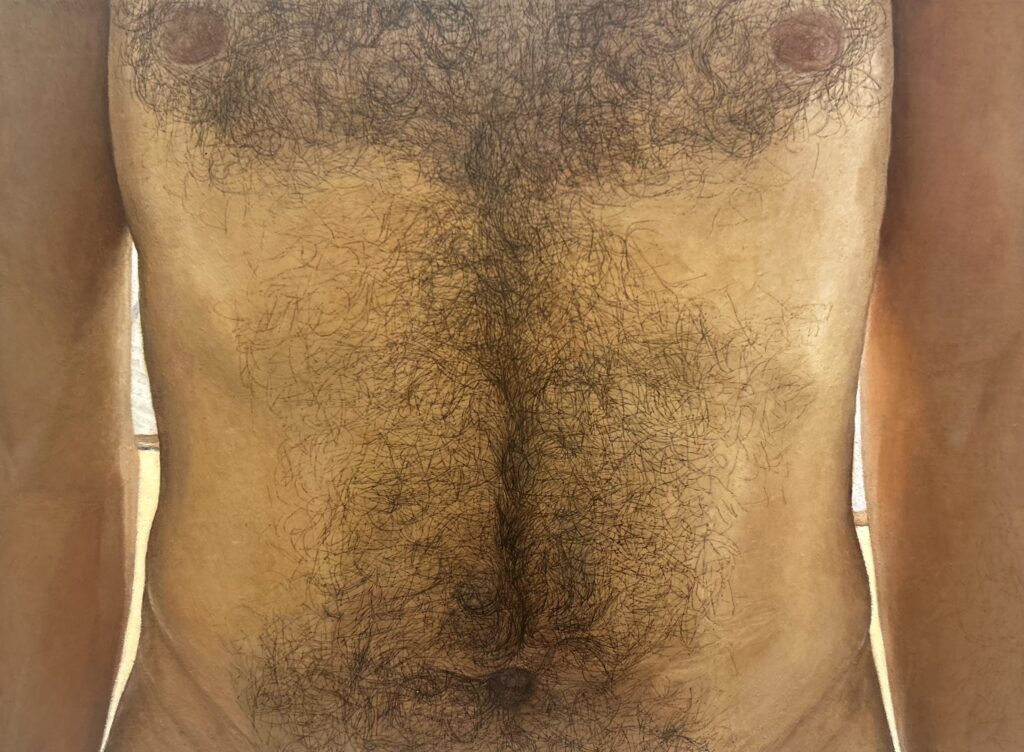
Ellen Altfest, "Torso," 2011, oil on canvas, 10 1/4 x 13 7/8 in., image by Giselle Torres.
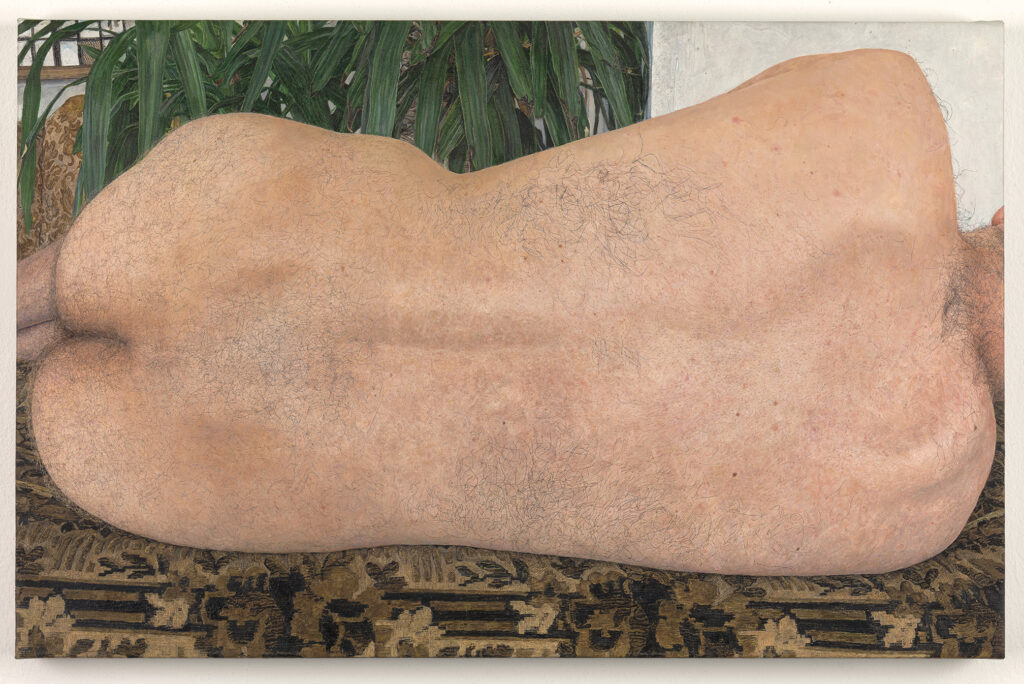
Ellen Altfest, "The Back," 2008-09, oil on canvas, 16 x 25 in., photographed by Todd-White Art Photography, courtesy of White Cube.
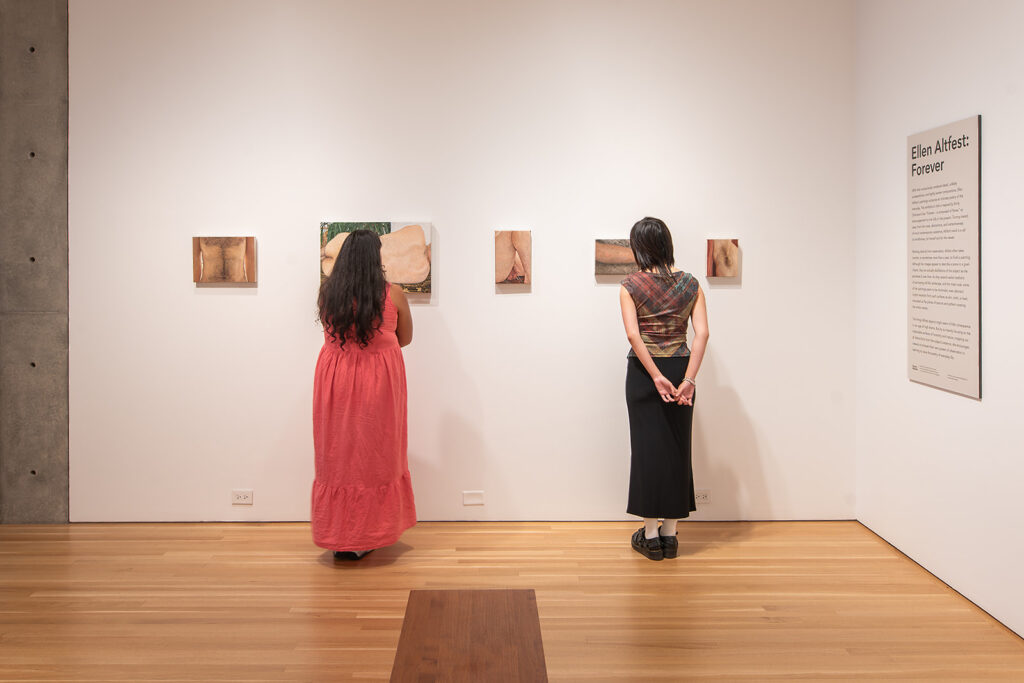
Installation view of Ellen Altfest: Forever, at Wrightwood 659, 2025. Photo courtesy of Daniel Eggert (@DesigningDan).