Educator Insight: Ese on Camilo Godoy's "What did they actually see?"
At first glance, Camilo Godoy’s series of three photographs, What did they actually see? (“Pervert”), (“Deviant”), (“Possessed”), appears as monochromatic black prints with little to no variation in shades and values. However, the three nearly 3×6 foot photographs mounted on aluminum suggest a presence. The dimness and mere scale of this work captivate the viewer whilst prompting careful investigation, and in that concentrated close looking, the artwork is activated. What did they actually see? demands the viewer’s time and commitment, revealing its visual components through pupil dilation, attention to detail and darkness adaptation. Dancing bodies emerge from the shadows, suspended, but with their agility fully intact. Bodies emerge not only from the limited visibility but forgotten histories. Through the media of performance and photography, Godoy asks the question of “What did they actually see?”, reinterpreting the gaze of European Colonial reports first interacting with indigenous peoples of the Americas whilst adding context through visual barriers to entry. How can the reinterpretation of histories through performance and lens-based media disrupt colonial narratives of disenfranchised peoples?
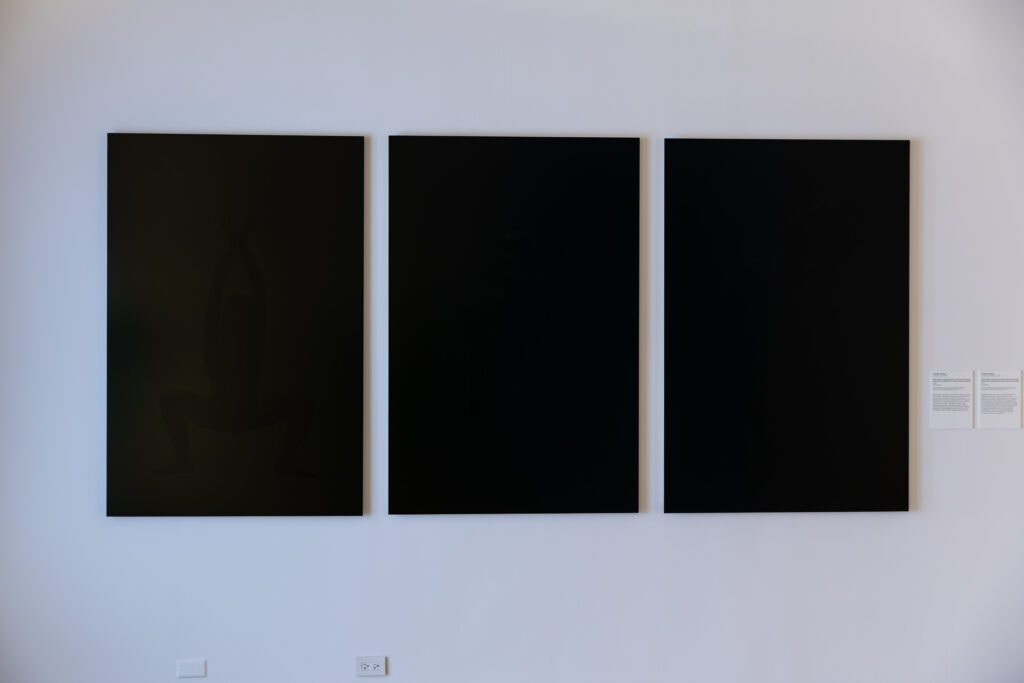
Installation view of "Dispossessions in the Americas: The Extraction of Bodies, Land, and Heritage from La Conquista to the Present", at Wrightwood 659, 2026. Photo by Shanti Knight.
“Barbaric”, “deviant”, “demonic”, and “out of control” are how European colonizers described ritual dances practiced by indigenous peoples of the Americas in their anthropological reports.[1] The violence of these written accounts remains active in their historical overshadowing of indigenous narratives and demonization of traditions through the colonial gaze. Godoy’s performance of this colonial report not only reclaims indigenous representation but gives context through insightful documentation. The low exposure of the photographs mimics the context of these ceremonial performances at night, often illuminated by a flame. The viewer is asked to change their physical orientation in relation to the artwork while perusing its surface area in order to take in the visuals in their entirety.
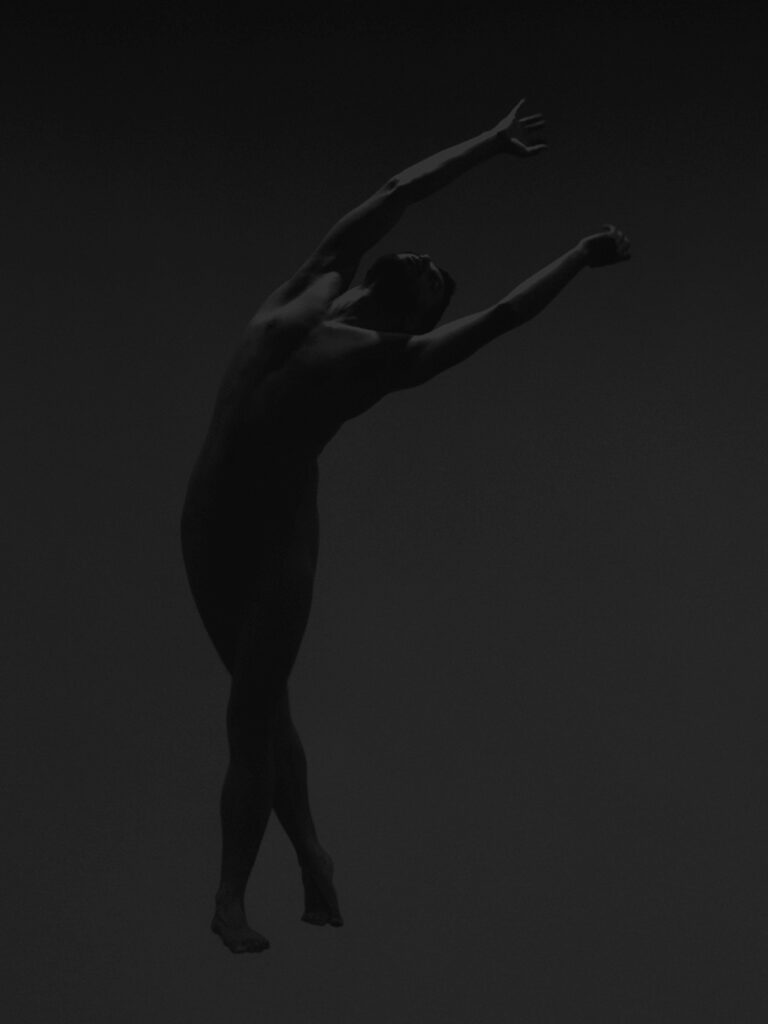
[Enhanced] Camilo Godoy, "What did they actually see? (“Possessed”)", 2018, archival pigment print mounted on aluminum (printed 2026). Courtesy of the artist and PROXYCO Gallery, New York
In “Deviant” Godoy’s hands rest open, cradling his upper body without contact. He stands with one leg raised, centering his potential energy as if in preparation to reunite with the ground in an energetic stepping motion. In “Possessed” Godoy’s legs are extended while intertwined, finding a brief home in the midst of motion while his hands are outstretched diagonal to the frame. His body reads reverence and rumination. “Pervert” depicts Godoy in a squatting position, legs equidistant from his center with his arms raised, overlapping symmetrically. The names of the individual images harshly contrast the elegance of the photographed movements, investigating the amount of trust placed in anthropological reports. Godoy connects his own body to indigenous memory, highlighting the lack of corporeality in recorded histories. What did they actually see? requires curiosity and effort to even begin to indulge in the beauty of the gestures. The barriers to entry of Godoy’s triptych embrace the notion that written archives can be a living, reclaimable entity. This poses the question of how many histories are lost to violent, oppressive accounts. Will a resurgence in interacting with seemly static archives change how we view histories?
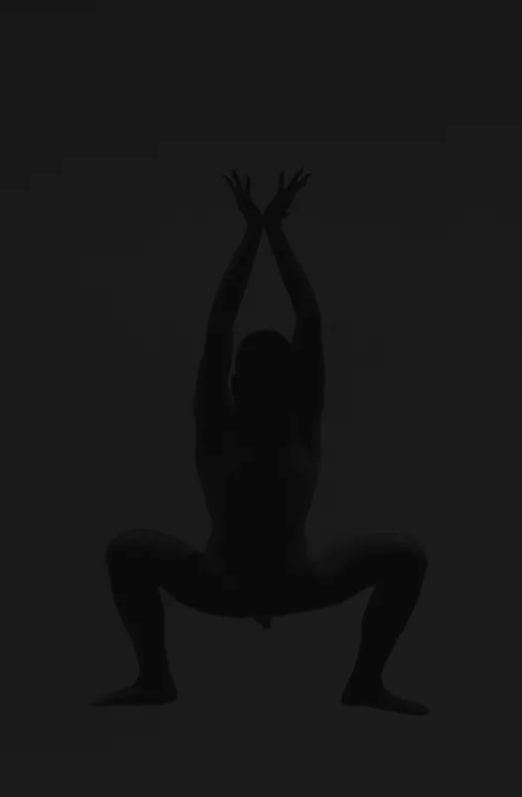
[Enhanced] Camilo Godoy, "What did they actually see? (“Pervert”)", 2018, archival pigment print mounted on aluminum (printed 2026). Courtesy of the artist and PROXYCO Gallery, New York
Endnotes:
[1] Apostolatos, Clara Maria. “Animating Memory: Affective Touch & Corporeality in the Work of Camilo Godoy and Carlos Martiel.” The Latinx Project at NYU. September 2, 2022. https://www.latinxproject.nyu.edu/intervenxions/animating-memory-affective-touch-amp-corporeality-in-the-work-of-camilo-godoy-and-carlos-martiel?rq=dispossession.
Bio
Ese Ametri Gagoh is an educator at Wrightwood 659 and Chicago based artist with focuses in photography, music production, film, and printmaking. Themes of religion, ritual, queerness, relationships, and nature loom throughout their work, seeking to bring forth a sense of tranquility and togetherness.