Educator Insight: Danster on Archivo de la Memoria Trans
In spite of systemic attacks on trans memory, Archivo de la Memoria Trans draws digital connections through photography and story that subvert space and time, creating new possibilities for remembering and reliving trans life in digital common spaces. Archivo de la Memoria Trans (AMT) is a project started by trans activist Maria Belen Correa in 2012, shortly after the passing of her friend, activist, and co-creator of the archive Claudia Pia Baudracco. Based now in Hanover, Germany, Correa’s AMT serves as a digital space where trans Argentinians—particularly those who have experienced violence and harm—can reunite with their community members through the internet.[1]
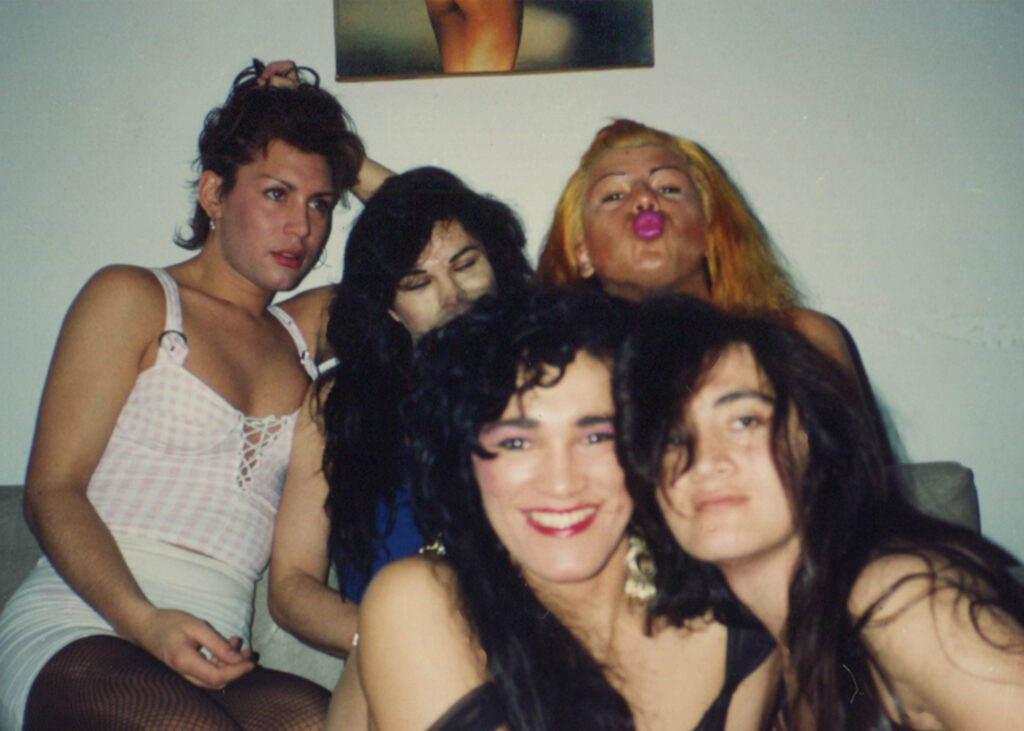
Archivo de la Memoria Trans, "Exilio", 1988–2007, Photographs. Courtesy of Archivo de la Memoria Trans.
The photographs selected for Dispossessions in the Americas capture transgender, transvestite, and transexual community members as they live in exile: traveling with friends, spend time at the beach, sleep on the train, and share moments of community. In stark difference, these moments are captured amidst a backdrop of structural resource deprivation and violence. Roughly 90% of trans Argentinians live in poverty and—excluded from the formal economy—95% resort to sex work as a means of survival. As a direct result, complications from silicone injections, HIV, and murder are the primary causes of death for trans Argentinians.[2]

Archivo de la Memoria Trans, "Exilio", 1988–2007, Photographs. Courtesy of Archivo de la Memoria Trans
Organizing against these conditions often results in police raids and persecution, conditions which forced founder Belen Correa into exile from Argentina, now residing in Hanover, Germany. Although Argentina has since passed the Gender Identity Law in 2012, allowing self-determination of name and gender identity, recent roll backs to the law in 2025 have again increased violence.[3] Consequently, AMT remains a critical site of community for trans Argentinians who remain constant targets of structural violence and— for those living in exile—cannot return home.

Archivo de la Memoria Trans, "Exilio", 1988–2007, Photographs. Courtesy of Archivo de la Memoria Trans.
Totaling more than 15,000 images, testimonios, songs, video, and writings, AMT’s photographs provide a look into how Trans lives are recorded and passed through social media. AMT proposes that everyday moments are critical insights into trans lives that are under constant threat by the Argentina government. Beginning with Baudracco’s personal belongings after her death in 2012—nearly 6,000 objects—AMT’s origin speaks to what scholar Baird Campbell calls networked animita: the assemblage of social media, pages, posts, photos, and content that are linked through an individual’s death and shared community.[4]
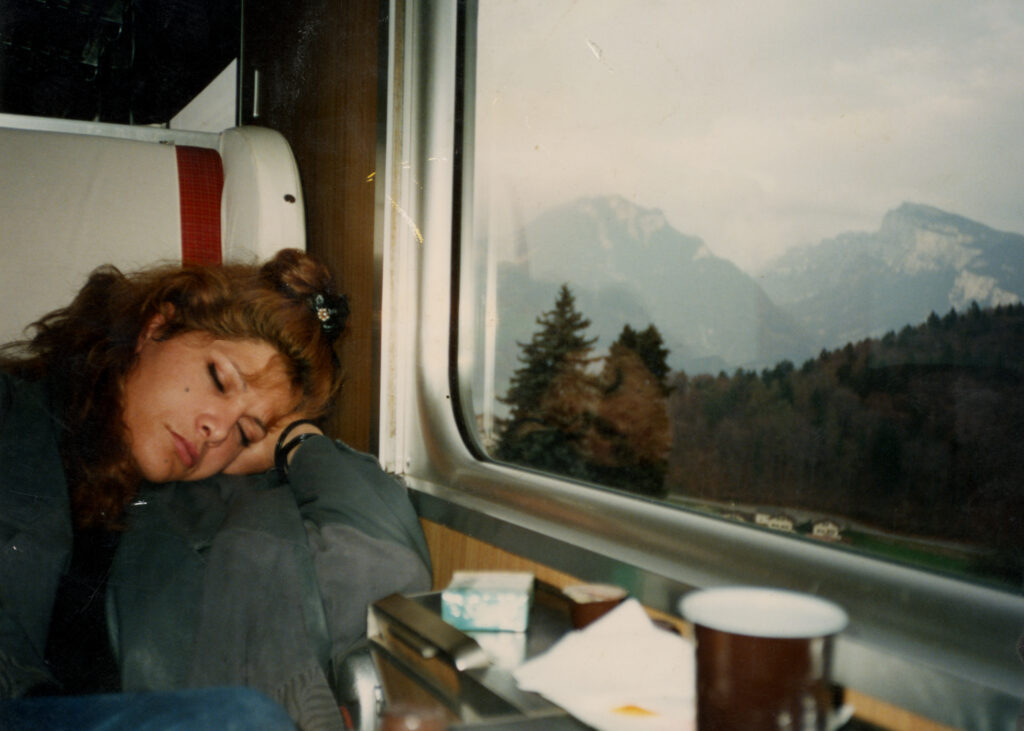
Archivo de la Memoria Trans, "Exilio", 1988–2007, Photographs. Courtesy of Archivo de la Memoria Trans.
Expanding to include thousands of artifacts from both deceased and living trans Argentinians, AMT’s archive disrupts linear understandings of life and death. With trans populations in Argentina possessing an estimated life span of 37 years (more than half that of the general population), the free digital commons of AMT immortalizes personal memory, circumventing the fugitivity of trans life.[5] Similarly to Campbell’s networked animita, AMT is a site where loved ones are both present and absent. Where memories can be shared without the threat of raids, exile, or death. As a result, AMT is a digital archive which centers trans knowledge, memory, and struggle in its remembering of trans pasts and works to imagine trans futures liberated from structures of oppression.
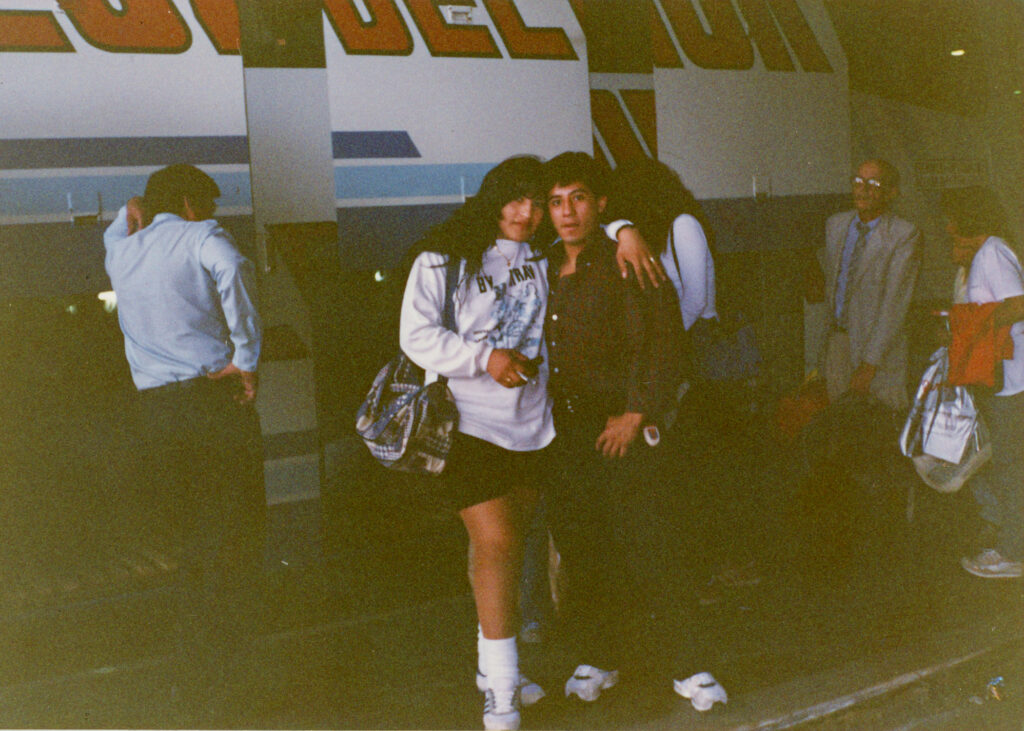
Archivo de la Memoria Trans, "Exilio", 1988–2007, Photographs. Courtesy of Archivo de la Memoria Trans.
Endnotes:
- “Archivo de La Memoria Trans.” 2025. Archivotrans.ar. 2025. https://archivotrans.ar/index.php/acerca.
- Redacción La tinta. 2018. “Ser Trans En Argentina | La Tinta.” La Tinta. March 19, 2018. https://latinta.com.ar/2018/03/19/ser-trans-argentina/.
- “Rollback of Trans Rights in Argentina: ILGALAC and ILGA World Statement on Decree 62/2025 – ILGA World.” 2025. ILGA World. February 10, 2025. https://ilga.org/news/argentina-gender-identity-law/.
- Campbell, Baird. 2020. “The Networked Animita: Transgender Remembrance on Social Media | Platypus.” Castac.org. 2020. https://blog.castac.org/2020/11/the-networked-animita-transgender-remembrance-on-social-media/.
- Carbajal, Mariana. 2023. “What the World Could Learn from Argentina about Trans Rights.” OpenDemocracy. June 19, 2023. https://www.opendemocracy.net/en/5050/argentina-trans-rights-luana-self-id-gabriela-mansilla-healthcare/.
Bio
Danster is an Educator at Wrightwood 659 and a researcher of subversive art practices.