Educator Insight: Arianne on the Joffrey Ballet's "Le Sacre du Printemps" (The Rite of Spring)
How did The Joffrey bring ballet’s past into its present?
In 1987, the company became the first in decades to perform the original choreography of a 1913 ballet so controversial it reportedly caused an opening night riot in Paris. In Le Sacre du printemps (The Rite of Spring), a village selects a young maiden to dance herself to death as a sacrifice to their gods of spring. Dancer Vaslav Nijinsky created shockingly modern choreography to match composer Igor Stravinsky’s irregular beat, dissonant sounds, and harsh brass. Dancers in Sacre must turn their feet in and jump suddenly without straightening from hunched poses, contrasting with traditional ballet’s turnout and graceful posture. After just four performances, Sacre was dropped from its company’s repertoire. Without a notated score from Nijinsky, the choreography became lost to the ballet world.
Robert Joffrey was inspired by Nijinsky as a virtuosic dancer and choreographer. In the 1970s, he joined forces with dance historian Millicent Hodson to research the historical remains of Nijinsky’s Sacre and revive the ballet. (1)
To reconstruct Nijinsky’s ballet, Hodson compiled evidence in looseleaf notebooks, one for each of the ballet’s twelve scenes. Each scrapbook-like page might include historical fragments from verbal, visual, or musical sources, including quotes from interviews with dancers, critics’ reviews, or drawings made in the dark of the theater during original Sacre performances. From these bits of evidence, Hodson matched movements with measures of the score. She realized that the concentric circles, crossbone shapes, and intersecting geometry on the vibrant costumes and in Nijinsky’s drawing Mask of God echoed the patterns that dancers traced on the floor as they gathered in clusters that whirled and broke apart. (2)
In the studio, Joffrey dancers’ embodied experience added to the reconstructed choreography. Nijinsky’s names for steps, like “bear step,” “bison step,” or “the storks,” prompted them to drop their classical instincts and evoked more interpretive movement. (3) Dancer Beatriz Rodriguez even remarked that practicing Sacre made her sore in different parts of her body than practicing classical roles. (4) When The Joffrey’s Sacre took the stage, Hodson was confident that the choreography was 85% Nijinsky. For the rest, she made educated interpretations, bridging the gaps between “the last known movement and the next known movement.” (5) Some viewers considered it impossible to authentically revive a ballet from fragmentary evidence; others were amazed to experience the lost modernist masterpiece at all.
The Joffrey’s Sacre was an ambitious reconstruction that brought multimedia dance from ballet’s past into its present. Like Sacre itself, the project was controversial, difficult, and beautiful, all in service of re-enlivening ballet history.
Notes:
- Millicent Hodson, Nijinsky’s Crime against Grace: Reconstruction Score of the Original Choreography for Le Sacre Du Printemps (Stuyvesant, NY: Pendragon Press, 1996), http://archive.org/details/nijinskyscrimeag0000hods, xxv.
- The Search for Nijinsky’s Rite of Spring, directed by Judy Kinberg, Great Performances: Dance in America (WNET/13, 1989, 58 minutes.
- Suzanne Levy, “The Rite of Spring at Seventy Five,” Dance Research Journal 19, no. 2 (1987): 52–54.
- Lewis Segal, “Re-Rite of Spring,” Entertainment & Arts, Los Angeles Times (Iowa City), July 5, 1987, https://www.latimes.com/archives/la-xpm-1987-07-05-ca-2031-story.html.
- Julia Foulkes, “A Look at Joffrey Ballet’s Recreation of ‘The Rite of Spring,’” All Arts (WNET Group) in partnership with the New York Public Library for the Performing Arts, November 18, 2024, https://www.allarts.org/2024/11/joffrey-riteofspring-nypl-lpa/.
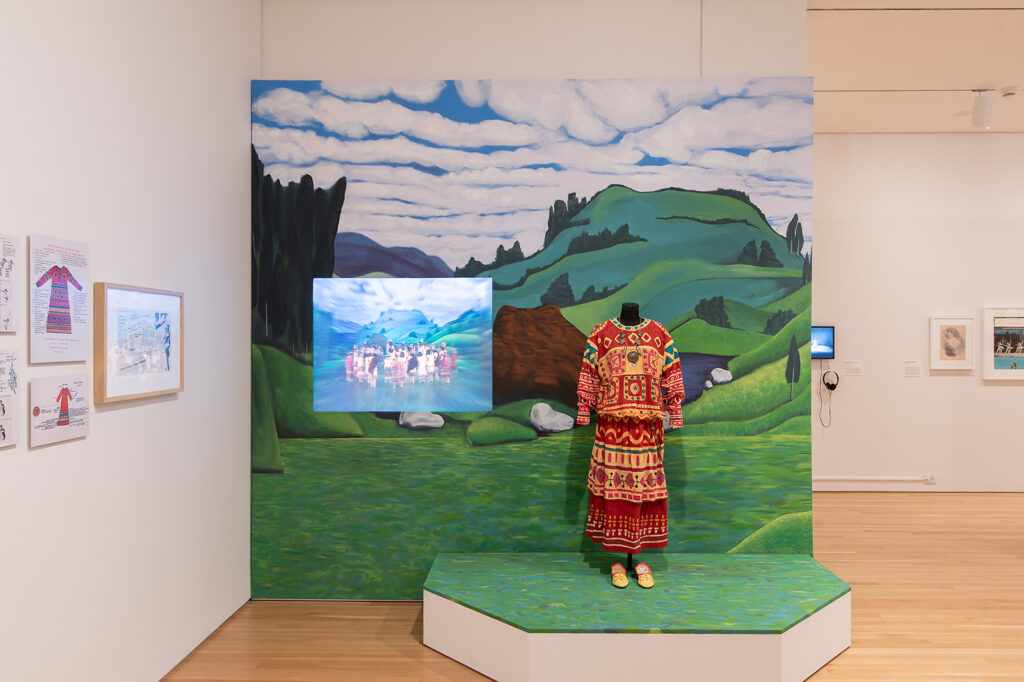
Installation view of "The Joffrey + Ballet in the U.S", at Wrightwood 659, 2025. Photo courtesy of Daniel Eggert (@DesigningDan).
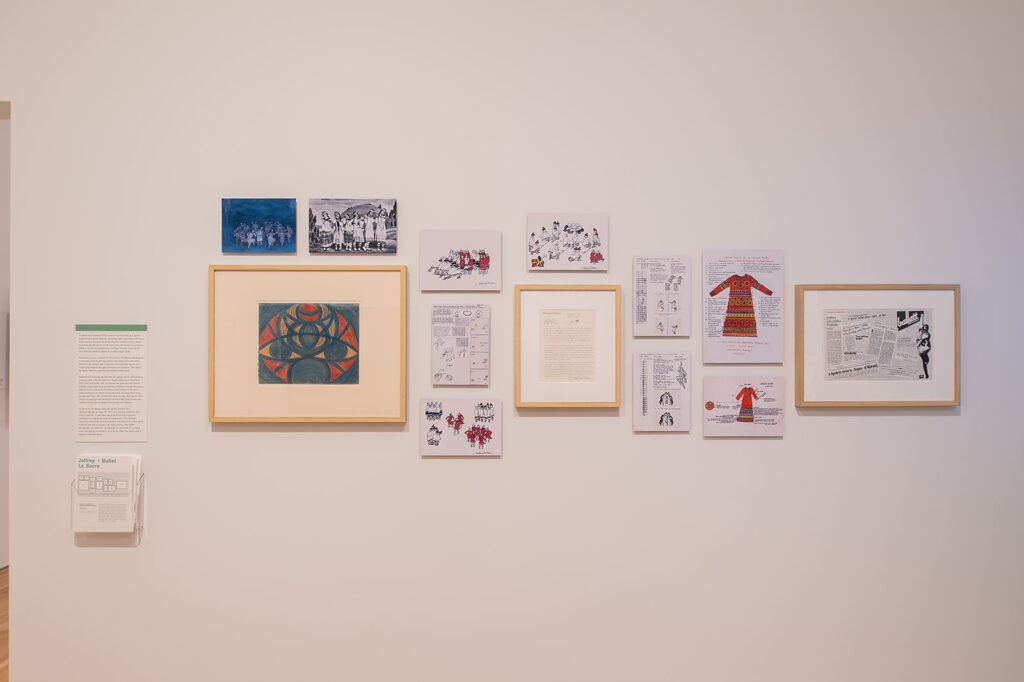
Installation view of "The Joffrey + Ballet in the U.S", at Wrightwood 659, 2025. Photo courtesy of Daniel Eggert (@DesigningDan).
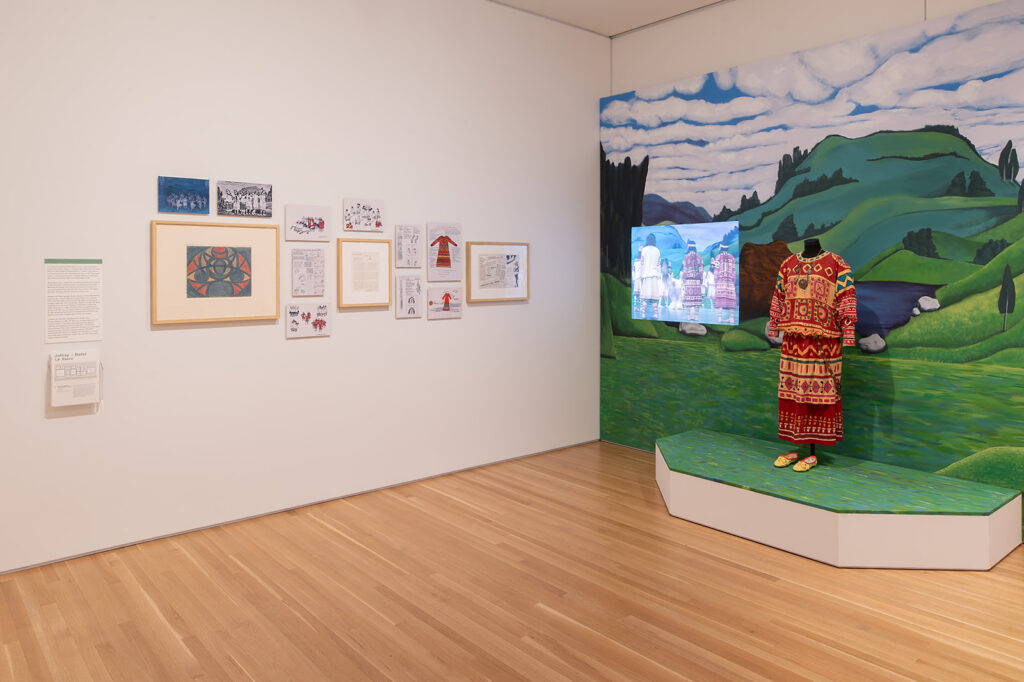
Installation view of "The Joffrey + Ballet in the U.S", at Wrightwood 659, 2025. Photo courtesy of Daniel Eggert (@DesigningDan).