Educator Insight: Liv on Scott Burton and Feminism
Scott Burton believed gay liberation was connected to fighting other forms of oppression; his ethos were particularly inspired by the women’s movement and feminists of the late 1960s and early 1970s.[1] Burton interacted with prominent feminist artists and critics in the art world at this time, adopting key tenets of feminist thinking in his artwork by subtly drawing attention to ways sexism was ingrained in artistic institutions.[2] These feminist interests can be seen in photographs from Eighteen Pieces, a series of performances he curated at Finch College on March 4, 1971, which reference one of the most popular objects in art history and subjects of critique by feminist artists and art historians: the reclining woman.
Eighteen Pieces was commissioned by Elayne Hanley Varian, director of the contemporary wing at the Finch College Museum of Art. Finch was a women’s college in Manhattan, and the performance was shaped with this audience in mind. Eighteen Pieces was 18 short performances on a stage. Many of the pieces focused on women moving, dressing, and posing, the stage acting as a canvas and actresses forming the compositions. The photograph of Bathers shows a work in progress; we see two of the final eight women who came out on stage, one by one, and laid down in various relaxed positions.[3] This motif is repeated in Twelve Poses, where a well-dressed woman spreads out on a couch. While these pieces may not demonstrate an explicitly feminist stance, Burton’s activation of the female body, having the performers move around the stage and multiply, turns the often-passive female-body-as-object into female-body-as-subject. The reclining woman in painting is supposed to be seen only in that position; viewers are not meant to question what she may have been doing before or what she will be doing after. By bringing her to the stage, the reclining woman’s purpose and traditional presentation is disturbed, allowing the viewer to consider new ways women are participating in the art world. Burton’s role as a gay male artist also disrupts the history of the reclining woman’s depiction by primarily heterosexual painters.
Burton further toys with patriarchal norms in Self-Portrait as Modern Artist, a photo that should be read in conjunction with contemporary feminist critiques of the masculine art world. In Self-Portrait, Burton poses atop a white pedestal, in paint covered overalls, with his long hair, and a large dildo strapped to his pelvis. There is a mixture of symbols here that complicate viewer experience of sex and gender in ways feminist artists also employed. His use of the photograph in collages and cutouts in the following years make direct reference to the infamous Lynda Benglis Art Forum advertisement of 1974.[4] His solidarity with Benglis, a woman ostracized for taking a photo with a similar composition, demonstrates his commitment to supporting women as they push artistic and sexual boundaries. Not all queer male artists felt gay liberation and women’s rights were interlinked at this time, making Burton’s clear alliance with feminists one worth investigating and celebrating.
Notes
- Wall Label, Scott Burton: Shape Shift, 2024, Pulitzer Arts Foundation, St. Louis, MO.
- Worth noting is feminist artist and friend of Burton, Jane Kaufman’s statement, “‘I wouldn’t call him a feminist. It’s hard for me to think of a man as a feminist. Then [in the 70s] it was a women’s movement.’” David Getsy, Queer Behavior: Scott Burton and Performance Art (Chicago, Illinois; The University of Chicago Press, 2022): 94.
- Scott Burton, “Finch,” March 4, 1971, Scott Burton Papers, II.31. Museum of Modern Art, New York City, NY.
- Getsy, Queer Behavior, 187.
Liv Majetich is an educator at Wrightwood 659 and a graduate student in the Loyola Chicago Gender Studies program; he is primarily interested in connecting trans* and feminist theory to art history and art activism.
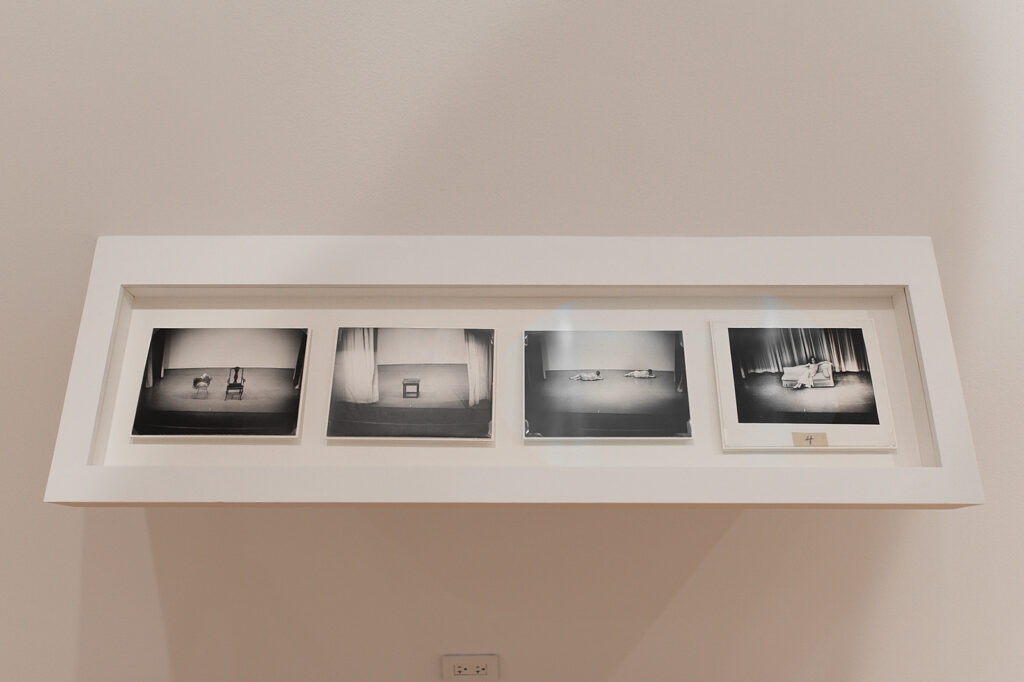
Installation view of Scott Burton: Shape Shift, at Wrightwood 659, 2025. Photo courtesy of Daniel Eggert (@DesigningDan).
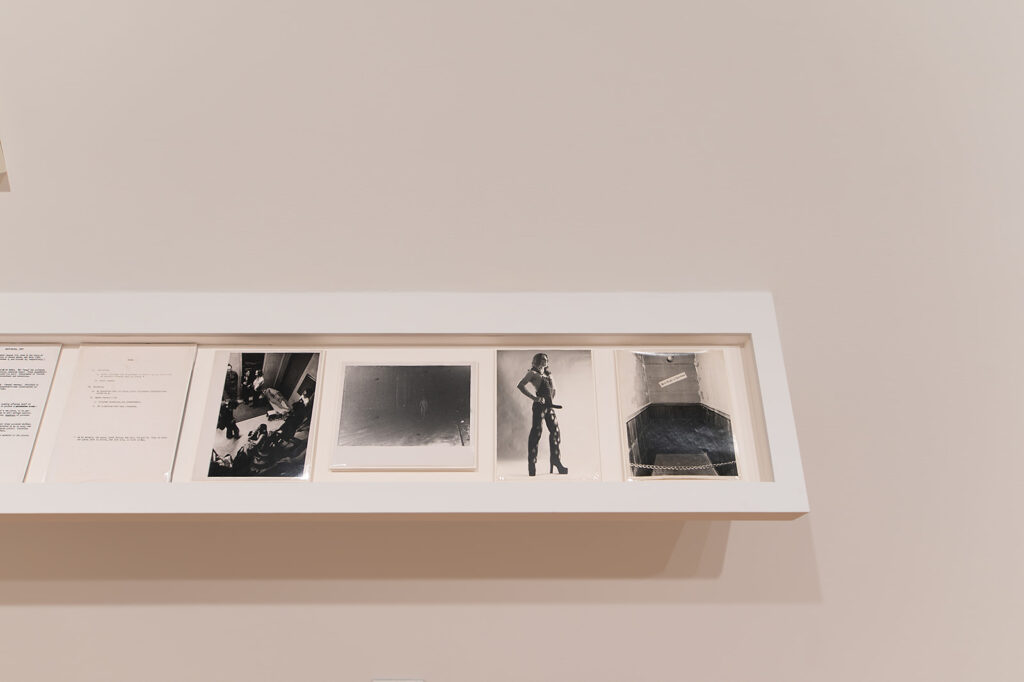
Installation view of Scott Burton: Shape Shift, at Wrightwood 659, 2025. Photo courtesy of Daniel Eggert (@DesigningDan).