Educator Insight: Asa on Cruising, Chairs, and the Human Body
Scott Burton observed that, through body language, people could convey messages about class, gender, and sex. He explored body language and behavior in early works such as Behavioral Tableaux, in which he choreographed poses based off what he saw “in the bars, in baths and on the street corners that [he] frequented(1),” drawing from his experience as a gay man cruising in 1970s New York City.
By the 1980s, Burton’s work had largely shifted from performance to designing sculptural furniture, but he remained curious about body language.(2) A chair’s material, shape, and position may invite someone to sit or discourage someone from sitting. Two-Part Chaise Longue signals a certain way of sitting while also resembling a person reclining, supported by their arms behind them and bent legs in front of them. Burton was fascinated with the way chairs formally resemble people, having backs, legs, and arms.
Two-Part Chair is another example of Burton’s furniture that acts as an image of the human body. Two polished granite parts are joined at a right angle, only able to stand with each other’s support. The part that forms the chair’s back encases the part forming the seat, their rectangular shapes like two bodies embraced. When someone encounters Two-Part Chair, whether they recognize the two granite pieces as people in an intimate embrace during queer sex or not, they recognize it as an unusual chair.
Bringing unconventional furniture into public space was a queer act in and of itself. In a 1980 interview with Edward Brooks DeCelle, Burton idealized that doing so could be a tool for social change towards acceptance:
“Something that isn’t like a usual chair – can make people perhaps more flexible in their attitudes to accept more things – to become more democratic about what a chair is. They may even become more democratic about what a person is. Art can be a moral example. The gay world doesn’t get enough good moral examples from visual art.”(3)
Throughout the mid 1970s and the 1980s, Burton received civic commissions and created sculptural furniture for public spaces like plazas, parks, and the street. As Burton lived with HIV from 1983 until his death in 1989, he designed street furniture meant to last. Often made of stone or metal, Burton’s sculptures hold and support those who sit in them, bringing unexpected encounters of care into everyday life.
- Getsy, David J. “Introduction: Scott Burton’s Queer Postminimalism.” In Queer Behavior: Scott Burton and Performance Art. University of Chicago Press, 2022.
- “Second Interview with Scott Burton for the Archives of American Art, conducted by Lewis Kachur.” The Museum of Modern Art Archives, September 25, 1987.
- “Edward Brooks de Celle papers relating to Scott Burton,” 1980-1982. Quoted in David J. Getsy “Queer Behaviour: Scott Burton’s Public Sculptures,” Burlington Contemporary, May 3, 2023, https://contemporary.burlington.org.uk/articles/articles/queer-behaviour-scott-burtons-public-sculptures.
Asa Mizock is an educator at Wrightwood 659 and an artist and designer. Working across printed matter, digital animation, and clay, he illustrates everyday moments for all that makes them humorous, sincere, and shared.
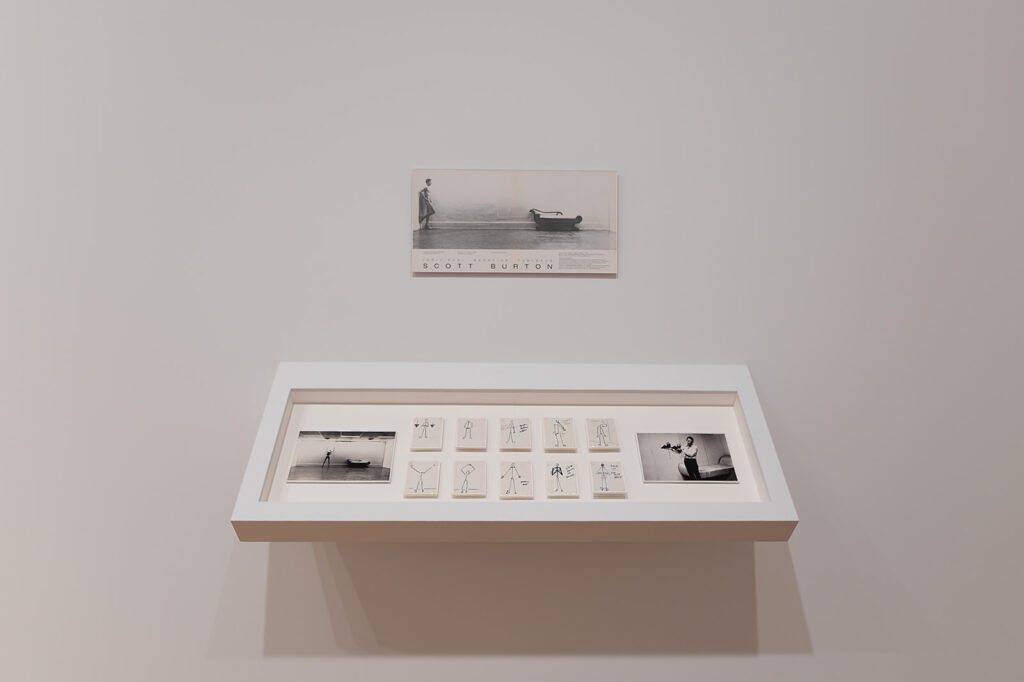
Installation view of "Scott Burton: Shape Shift", at Wrightwood 659, 2025. Photo courtesy of Daniel Eggert (@DesigningDan).
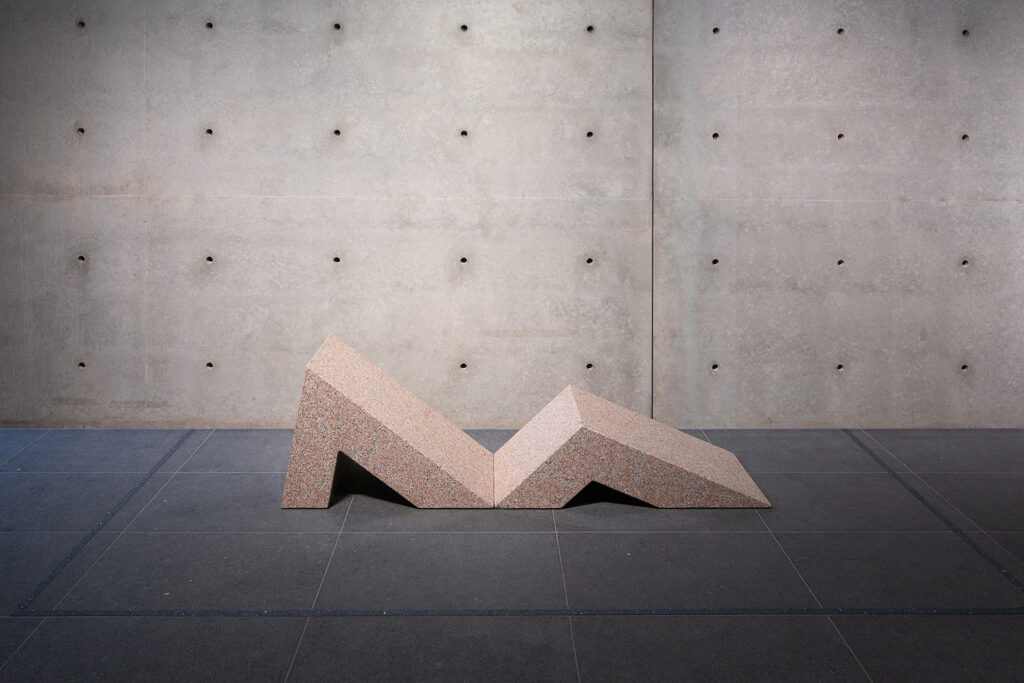
Installation view of "Two-Part Chaise Lounge" in "Scott Burton: Shape Shift", at Wrightwood 659, 2025. Photo courtesy of Daniel Eggert (@DesigningDan).
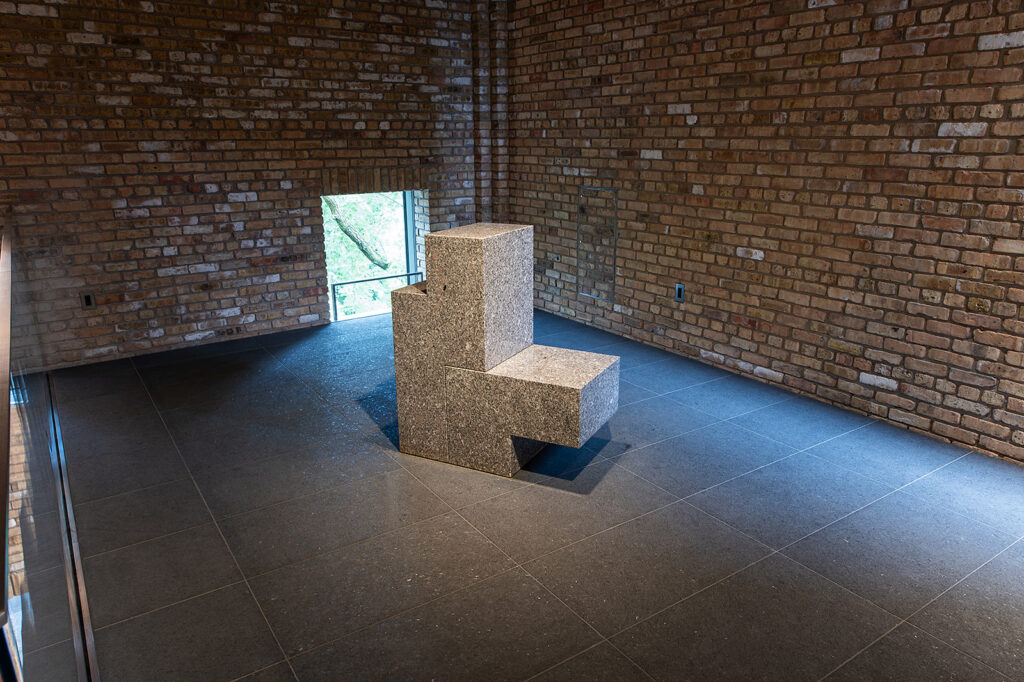
Installation view of "Two-Part Chair" in "Scott Burton: Shape Shift", at Wrightwood 659, 2025. Photo courtesy of Daniel Eggert (@DesigningDan).
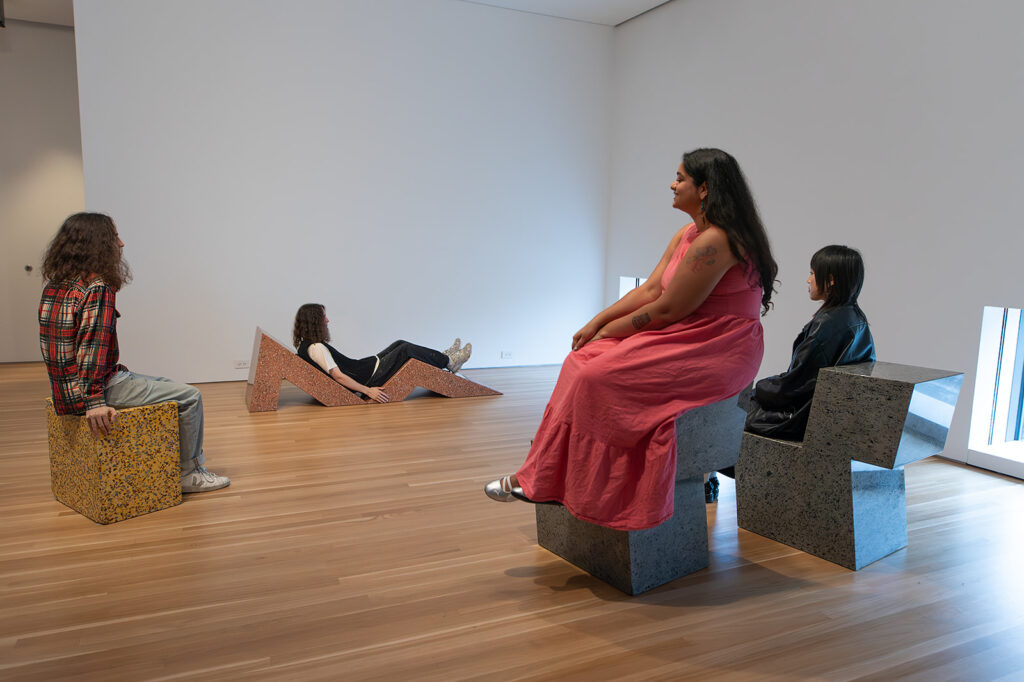
Installation view of "Scott Burton: Shape Shift", at Wrightwood 659, 2025. Photo courtesy of Daniel Eggert (@DesigningDan). Models (left to right): Jake Planer, Ben Planer, Sarika Tatineni, Haemin Kim