Educator Insight: Khytul on Asha Kama Wangdi
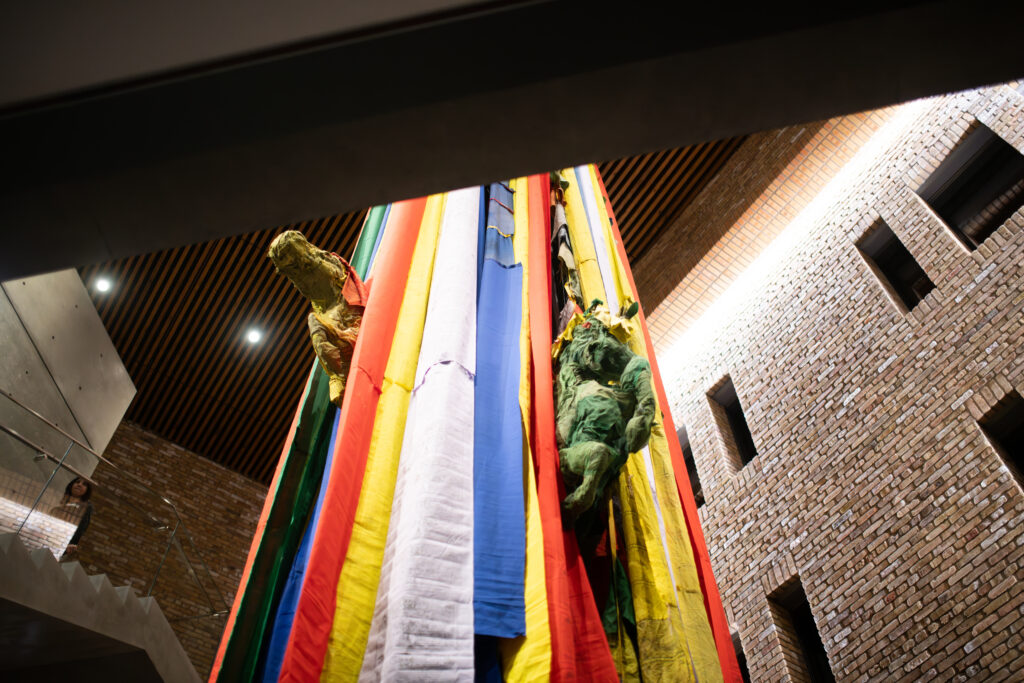
Asha Kama Wangdi, VAST Bhutan, The Windhorse (lungta); 2024; cloth and metal; installation view at Wrightwood 659. Photo courtesy of Daniel Eggert (@DesigningDan).
How can art serve as a bridge between cultural preservation and global dialogue? How do artists navigate cultural diplomacy through their work?
Asha Kama Wangdi’s Windhorse (Lungta) currently hangs from the third floor ceiling above the atrium at Wrightwood659. A part of the Rubin Museum’s Reimagine: Himalayan Art Now, Windhorse is shown in dialogue with a 15th-19th century carved woodblock from the Rubin Museum’s permanent collection.
Central to both, the woodblock and Windhorse are depictions of Lungta, a Tibetan mythical creature with the speed of the wind and the form of a horse, that carries prayers from earth to the heavens.
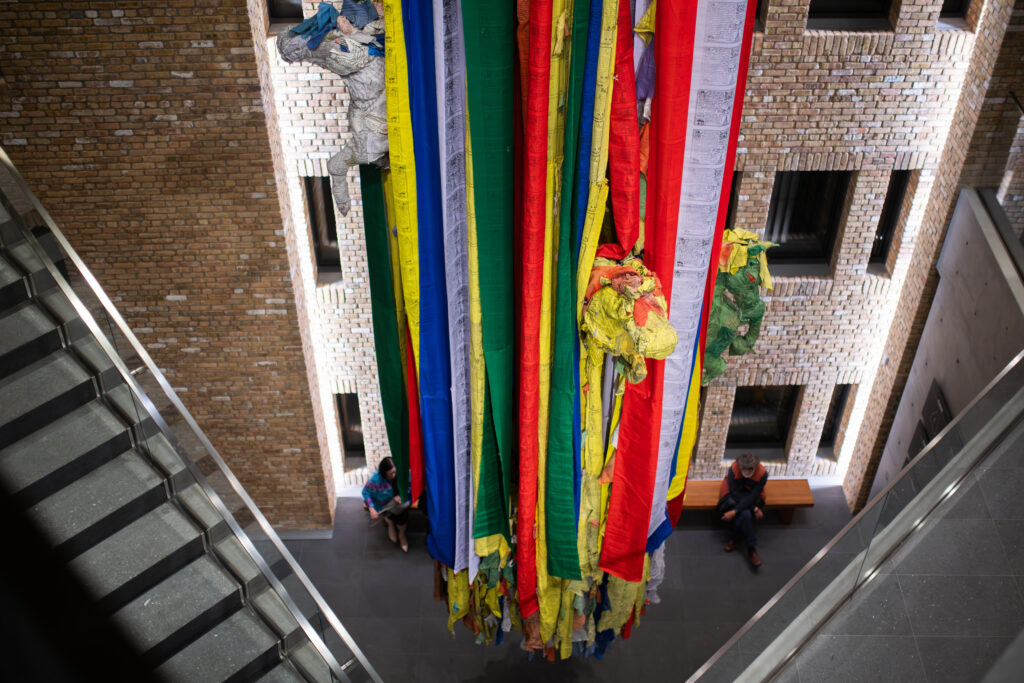
Asha Kama Wangdi, VAST Bhutan, "The Windhorse (lungta)"; 2024; cloth and metal; installation view at Wrightwood 659. Photo courtesy of Daniel Eggert (@DesigningDan).
With the evolution of prayer flags from their traditional wood block form to their contemporary 20th-century industrially produced forms, comes a significant challenge of the synthetic flags becoming an environmental hazard, polluting the mountains and entangling around the trees of Bhutan.
For the Bhutanese artist Kama Wangdi endearingly known as Asha Kama, the “wasted prayers”, as he refers to them, led him to salvaging the flags and repurposing them into momentous installations, like the one currently on display at Wrightwood 659.
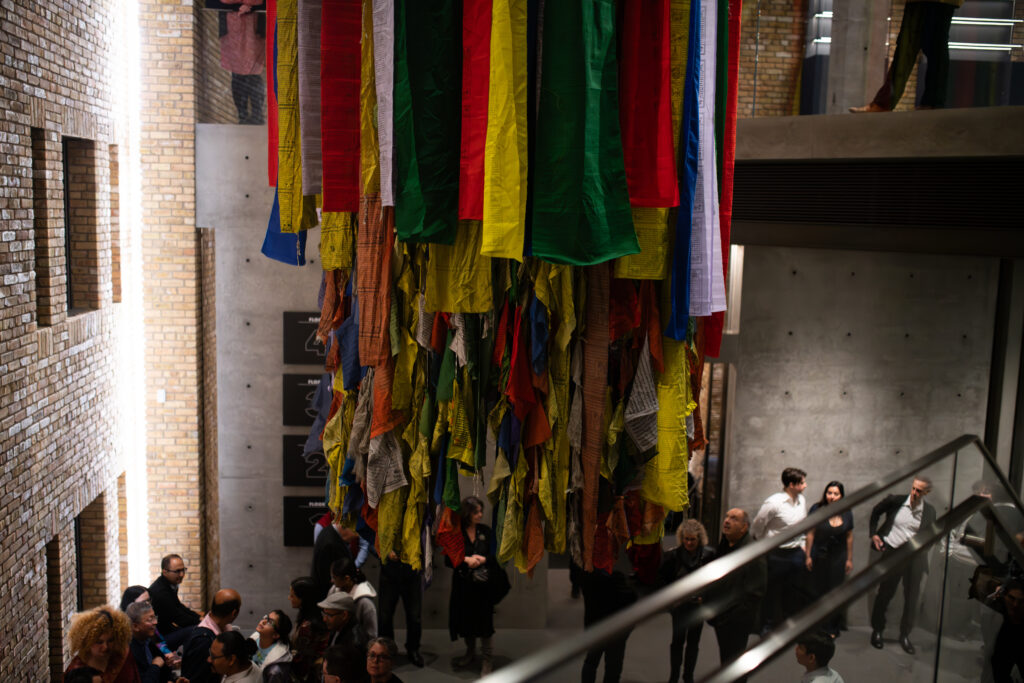
Asha Kama Wangdi, VAST Bhutan, The Windhorse (lungta); 2024; cloth and metal; installation view at Wrightwood 659. Photo courtesy of Daniel Eggert (@DesigningDan).
Asha Kama’s use of prayer flags in Windhorse not only brings to light the environmental concerns but also fosters cross-cultural dialogue, bridging Bhutanese traditions with contemporary global issues. Through the use of prayer flags in their originally intended suspended form, Windhorse recognizes sacredness with Buddhistic tonality, while serving its function of calling for ecological consciousness.
The layered, suspended forms of Windhorse evoke movement and transcendence, mirroring the mythical creature’s skyward passage and its role as carrier of hopes and prayers. The contemporary Lungta juxtaposed with the traditional woodblock encourages dialogue on the necessary representations and evolving meaning of tradition and ritual in contemporary culture. Additionally, it raises critical questions about how traditions shape and evolve amidst the growing imperative for sustainability.
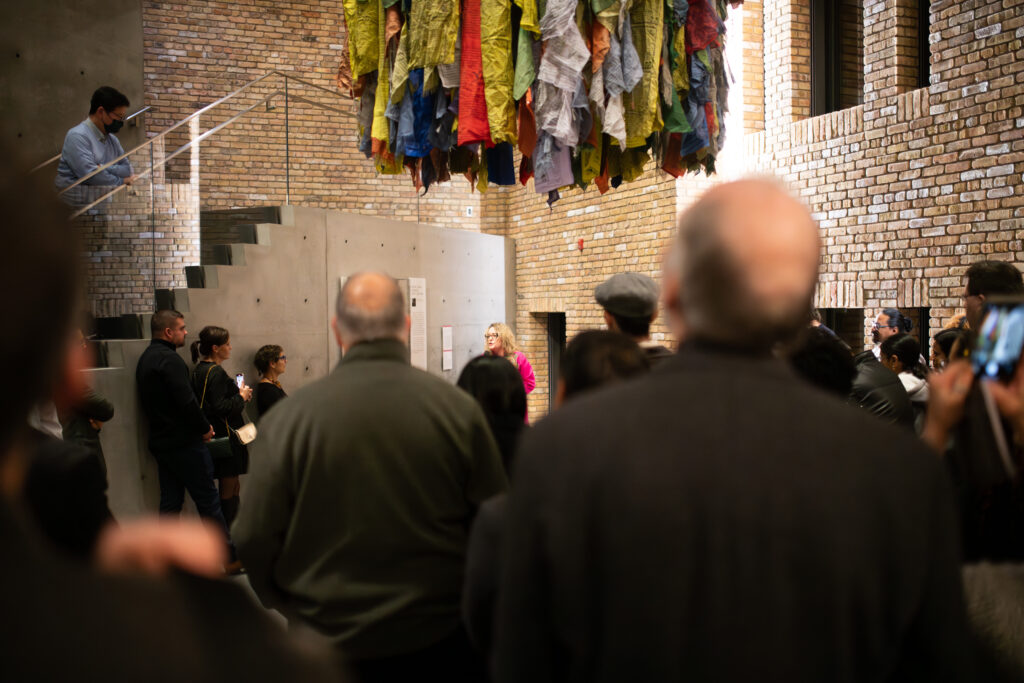
Asha Kama Wangdi, VAST Bhutan, The Windhorse (lungta); 2024; cloth and metal; installation view at Wrightwood 659. Photo courtesy of Daniel Eggert (@DesigningDan).
In 1997, Asha Kama co-founded VAST (Voluntary Artists Studio, Thimphu), an organization that redefined the trajectory of Bhutanese art by extending its emphasis beyond traditional forms. His work, rooted in Bhutanese heritage, balances preserving cultural identity and addressing pressing global issues. In doing so, his work is not only a testament to Bhutan’s rich cultural identity, but also becomes a medium for him to connect across generations and cultures, encouraging a global understanding through art.
Through works like Windhorse, art becomes a bridge, connecting traditional to global, past to present, and spirituality to sustainability, and invites us to consider how creative practices can inspire reflection in our shared world.
Bibliography:
Rubin Museum of Art. 2024. “Artist in Focus: Asha Kama Wangdi.” Rubin Museum of Art. Accessed November 30, 2024. https://rubinmuseum.org/artist-in-focus-asha-kama-wangdi
United Nations Development Programme (UNDP) Bhutan. 2022. “Wind of Change.” UNDP Bhutan Exposure. Accessed November 30, 2024. https://undp-bhutan.exposure.co/wind-of-change
VAST Bhutan. 2024. “About Us.” Voluntary Artists Studio, Thimphu (VAST Bhutan). Accessed November 30, 2024. https://rubinmuseum.org/artist-in-focus-asha-kama-wangdi
Nepali Times. “Let’s Only Buy Biodegradable Prayer Flags.” Nepali Times, 2023. Accessed December 02, 2024. https://nepalitimes.com/here-now/lets-only-buy-bio-degradable-prayer-flags